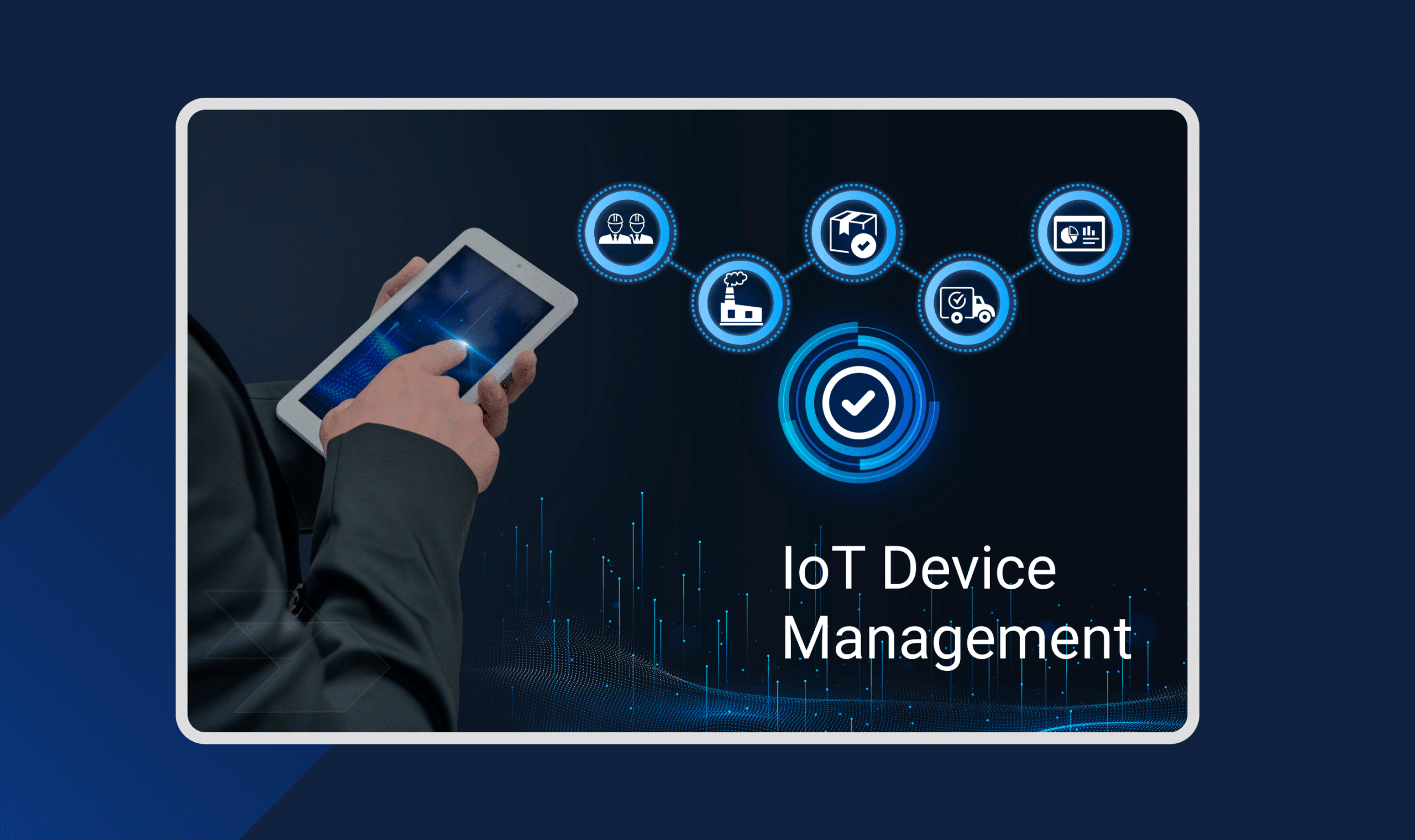
What is IoT Device Management?

Ai For Manufacturing

The Internet of Things (IoT) has revolutionized how devices communicate, allowing businesses to automate operations, enhance efficiency, and collect real-time data. However, managing a growing network of connected devices presents challenges in security, performance, and maintenance. This is where IoT device management plays a crucial role.

IoT device management refers to the processes, tools, and technologies used to provision, monitor, maintain, and secure IoT devices throughout their lifecycle. It ensures that devices operate optimally, remain secure, and seamlessly integrate within an IoT ecosystem.

In this blog, we will explore the key aspects of IoT device management, its benefits, challenges, and how businesses can implement an effective strategy.

Key Components of IoT Device Management

a. Device Provisioning and Configuration

Provisioning is the initial setup of an IoT device, ensuring it is correctly configured and authenticated before connecting to the network. This involves:

  • Assigning unique device identities
  • Establishing secure connections
  • Configuring initial settings and operational parameters

b. Remote Monitoring and Diagnostics

Continuous device monitoring is essential for maintaining performance and detecting issues. An IoT device management platform provides real-time insights into:

  • Device uptime and performance metrics
  • Battery and energy consumption
  • Network connectivity and signal strength

Remote diagnostics reduce downtime and minimize physical intervention, enhancing operational efficiency.

c. Firmware and Software Updates

Regular firmware updates keep IoT devices secure and functional. IoT device management enables:

  • Remote firmware upgrades to improve performance
  • Bug fixes and feature enhancements
  • Security patches to protect against vulnerabilities

d. Security and Compliance Management

Security is a major concern in IoT ecosystems, where millions of connected devices can be exploited by cyber threats. Effective IoT security management includes:

  • End-to-end encryption for secure data transmission
  • Access control mechanisms to prevent unauthorized access
  • Regulatory compliance with GDPR, HIPAA, and ISO 27001

e. Device Decommissioning

Proper decommissioning at the end of a device’s lifecycle prevents security risks. This process involves:

  • Securely erasing sensitive data
  • Disconnecting the device from networks
  • Recycling or repurposing hardware to reduce e-waste

Benefits of IoT Device Management

a. Enhanced Operational Efficiency

By automating device provisioning, monitoring, and updates, businesses can improve efficiency and reduce manual efforts.

b. Strengthened Security

With real-time threat detection and automated security updates, IoT device management reduces cyber risks and protects sensitive data.

c. Reduced Maintenance Costs

Remote device management minimizes the need for on-site servicing, lowering operational costs while ensuring continuous performance.

d. Scalability for Expanding IoT Networks

A well-structured IoT device management system supports scalability, allowing businesses to expand their IoT deployments seamlessly.

e. Data-Driven Decision Making

IoT devices generate valuable real-time data that helps businesses make smarter decisions and optimize operations.

Challenges in IoT Device Management

a. Device Diversity

Managing different IoT devices with varying specifications, operating systems, and protocols complicates standardization.

b. Cybersecurity Threats

Without strong encryption and authentication, IoT devices are vulnerable to cyberattacks, data breaches, and unauthorized access.

c. Network Connectivity Issues

Unstable or weak network connections can disrupt IoT device operations, leading to data loss and inefficiencies.

d. Firmware Compatibility

Deploying updates across multiple device types without causing failures or service disruptions is a key challenge.

How Amazatic’s IoT Device Management Services Can Help

At Amazatic, we offer comprehensive IoT device management solutions to help businesses optimize and secure their IoT infrastructure. Our services include:

  • Seamless device onboarding and provisioning
  • Real-time monitoring and advanced analytics
  • Automated firmware updates and security patching
  • Scalable IoT solutions for growing businesses
  • Robust security measures to ensure compliance

With Amazatic’s expertise, businesses can enhance IoT security, performance, and efficiency, ensuring seamless device operations.

Conclusion

IoT device management is essential for businesses looking to scale their IoT infrastructure while ensuring security, efficiency, and reliability. By implementing a robust device management strategy, businesses can reduce costs, optimize device performance, and safeguard data.

As IoT adoption continues to rise, investing in a trusted IoT device management platform is key to staying ahead in the digital landscape.

Looking for expert IoT device management solutions? Contact Amazatic today to optimize your IoT ecosystem and drive business growth.

Benefits of IoT: How the Internet of Things is Transforming Our World

Ai For Manufacturing

The Internet of Things (IoT) is revolutionizing the way we live and work. From smart homes and connected cars to industrial automation and healthcare advancements, IoT is everywhere. Businesses and individuals are embracing IoT-driven solutions to improve efficiency, reduce costs, and enhance convenience. But what exactly makes IoT so beneficial?

In this blog, we’ll explore the major advantages of IoT and how it is shaping industries and everyday life.

Enhanced Connectivity & Automation

One of the biggest advantages of IoT is seamless connectivity. Devices, sensors, and systems can communicate with each other in real time, enabling automation and reducing manual efforts.

How IoT Enhances Connectivity

  • IoT devices are connected through Wi-Fi, Bluetooth, 5G, and cloud computing, ensuring smooth data transfer.
  • Industries like manufacturing use automated IoT systems to monitor machines and optimize workflows.
  • Smart homes leverage IoT-enabled thermostats, lights, and security systems that adjust automatically based on user preferences.

Improved Efficiency & Productivity

IoT enables businesses to streamline operations, leading to better efficiency and higher productivity.

How IoT Boosts Productivity

  • Automated workflows: IoT eliminates repetitive tasks by automating processes.
  • Real-time monitoring: Businesses can track machine performance and detect failures before they occur.
  • Data-driven decision-making: IoT provides real-time analytics that helps companies optimize their strategies.

Cost Savings & Resource Optimization

IoT helps businesses cut costs by reducing waste, improving asset utilization, and lowering operational expenses.

Ways IoT Reduces Costs

  • Predictive maintenance: Sensors detect potential machine failures before they happen, reducing costly downtime.
  • Energy efficiency: Smart IoT devices control lighting, heating, and cooling based on usage, minimizing energy consumption.
  • Supply chain optimization: IoT improves inventory management, reducing unnecessary expenses and preventing overstocking.

Better Decision-Making with Real-Time Data

IoT generates vast amounts of data, allowing businesses and individuals to make informed decisions quickly.

How IoT Enhances Decision-Making

  • Instant insights: Businesses can analyze real-time data from connected devices to improve operations.
  • Proactive problem-solving: Companies can identify and fix inefficiencies before they escalate.
  • Enhanced customer experience: Businesses can personalize services based on customer behavior.

Enhanced Security & Safety

IoT plays a crucial role in ensuring security and safety, both in homes and workplaces.

How IoT Improves Security

  • Smart surveillance: IoT-powered security cameras provide live monitoring and instant alerts.
  • Access control systems: IoT-based biometric authentication ensures only authorized personnel access restricted areas.
  • Real-time alerts: IoT sensors detect smoke, gas leaks, or unusual activity, preventing potential hazards.

Personalized User Experiences

IoT adapts to user preferences, providing a personalized and convenient experience.

How IoT Enhances Personalization

  • Smart home automation: IoT-powered devices learn user habits and adjust settings automatically.
  • Wearable technology: Fitness trackers analyze activity levels and suggest customized workout plans.
  • AI-powered assistants: Virtual assistants like Alexa and Google Home provide tailored recommendations based on past interactions.

Sustainability & Environmental Benefits

IoT contributes to a greener and more sustainable world by optimizing resource consumption and reducing waste.

How IoT Supports Sustainability

  • Smart grids: IoT helps optimize energy distribution, reducing electricity wastage.
  • Smart agriculture: IoT sensors monitor soil conditions and automate irrigation, conserving water.
  • Eco-friendly transportation: IoT-enabled traffic management systems reduce congestion and emissions.

Future of IoT

As technology evolves, IoT is expected to grow even further, with new applications enhancing its capabilities.

Emerging IoT Trends

  • 5G integration: Faster connectivity will enhance IoT performance.
  • Edge computing: Data processing closer to the source will reduce latency.
  • AI-powered IoT: Artificial Intelligence will make IoT devices smarter and more responsive.
  • Smart cities: IoT will play a major role in urban development, making cities more efficient and sustainable.

Conclusion

The Internet of Things is reshaping industries, businesses, and everyday life by offering connectivity, efficiency, security, personalization, and sustainability. With its ability to automate processes, optimize resources, and provide real-time insights, IoT is an essential technology for the future.

As businesses and individuals continue to embrace IoT, its potential to improve lives and drive economic growth will only expand. Now is the perfect time to invest in IoT solutions to stay ahead in this rapidly evolving digital landscape.

How Amazatic Can Help You with IoT Solutions

At Amazatic, we specialize in IoT consulting, development, and integration. Our experts help businesses leverage IoT to improve operations, enhance customer experiences, and drive innovation. Whether you’re looking to develop smart solutions for your industry or optimize existing systems, our IoT services are tailored to meet your specific needs.

Want to unlock the full potential of IoT for your business? Get in touch with Amazatic today- contact@amazatic.com.

Revolutionizing Production Processes with AI for Manufacturing

Ai For Manufacturing

Artificial Intelligence (AI) in manufacturing refers to the integration of advanced algorithms and machine learning technologies into production processes to enhance efficiency, reduce waste, and improve product quality.

AI systems can analyze vast amounts of data to make informed decisions, optimize operations, and predict equipment failures, thus transforming traditional manufacturing practices into smart, interconnected ecosystems.

Incorporating AI into manufacturing can lead to several significant benefits for leaders and managers:

  • Enhanced operational efficiency through predictive maintenance and process optimization.
  • Improved product quality by utilizing AI-driven quality control systems.
  • Increased flexibility and customization in production lines to meet changing market demands.
  • Reduction of operational costs by streamlining supply chain management.
  • Data-driven decision making that allows for real-time insights and faster response times.

As AI technologies continue to evolve, manufacturers who adopt these innovations will likely gain a competitive advantage and prepare themselves for the future of smart manufacturing.

Key Characteristics

AI for manufacturing is transforming the industry with its ability to enhance efficiency, improve quality, and reduce costs.

Key characteristics include predictive maintenance, which uses AI algorithms to forecast equipment failures before they happen, thus minimizing downtime.

Another essential feature is process optimization, where AI analyzes production data to identify bottlenecks and suggest improvements.

Moreover, AI-powered quality assurance systems are capable of detecting defects in real-time, ensuring higher standards of product quality.

Additionally, AI facilitates supply chain optimization by predicting demand fluctuations, helping manufacturers to manage inventory more effectively.

Together, these traits contribute to a more responsive and agile manufacturing environment that adapts quickly to changing market demands.

How Does AI Enhance Manufacturing Processes?

AI for manufacturing operates by leveraging machine learning, data analytics, and smart algorithms to optimize various processes.

Firstly, data is collected from machinery, sensors, and production lines, providing valuable insights into operations.

AI analyzes this data in real time, detecting anomalies and predicting maintenance needs, thereby preventing costly downtimes.

Additionally, AI algorithms process historical data to forecast demand, enabling manufacturers to adjust production schedules accordingly and minimize waste.

In quality assurance, AI systems are implemented to inspect products for defects using computer vision technology, ensuring consistent output quality.

Furthermore, robotic solutions powered by AI can autonomously adapt to different tasks on the assembly line, learning from each operation to enhance efficiency.

Lastly, AI-driven supply chain management applications help streamline inventory processes, anticipating needs to maintain optimal stock levels.

By integrating these technologies, AI for manufacturing effectively drives efficiency, reduces costs, and improves overall operational effectiveness, transforming traditional manufacturing into a more innovative sector.

Examples of AI in Manufacturing

  • AI-powered predictive maintenance analyzes machine data, predicting failures before they happen, reducing downtime and operational costs significantly, thereby enhancing overall efficiency and productivity in manufacturing environments.
  • Quality control systems use AI-driven algorithms to inspect products on production lines, identifying defects with high precision, thus ensuring that only high-quality items reach consumers and minimizing waste.
  • Supply chain management applications utilize AI to forecast demand more accurately, optimizing inventory levels, reducing excess stock, and improving fulfillment rates, ultimately leading to increased customer satisfaction.
  • Robotics systems enhanced by AI adapt to changing tasks autonomously, learning from their environment and improving their operations over time, which streamlines workflows and reduces the need for manual intervention.
  • Human-robot collaboration systems enabled by AI enhance safety and productivity, as robots assist humans in assembly tasks, ensuring that workers can perform their duties more effectively without risking injury.

Importance of AI for Manufacturing Efficiency

Understanding AI for manufacturing is crucial as it revolutionizes production processes, enhances efficiency, and reduces costs.

As industries face increasing demands for quality and speed, incorporating AI technologies enables manufacturers to optimize operations, predict maintenance needs, and improve supply chain management.

Moreover, by leveraging data analytics and machine learning, companies can make informed decisions that ensure sustainability and competitiveness in the market. Embracing AI not only fosters innovation but also equips organizations to adapt to evolving consumer needs and industry standards, making it an invaluable asset in modern manufacturing.

Why User-Centric Design Is Crucial for Successful Mobile & Web Apps

Mobile App Consulting

Mobile and web apps have become indispensable tools for businesses and individuals alike. From communication and productivity to entertainment and e-commerce, apps are transforming how we interact with the world. However, the success of these apps hinges on one critical factor: how well they cater to the needs of their users. This is where user-centric design comes into play. User-centric design prioritizes the user’s needs, preferences, and behaviors throughout the development process, ensuring an intuitive and satisfying experience. Simply put, a great app isn’t just functional—it’s designed with the user at the heart of every decision.

What is User-Centric Design?

User-centric design is a design philosophy that focuses on creating solutions tailored to the needs, goals, and pain points of the end users. This approach ensures that apps are not just aesthetically pleasing but also practical and easy to use.

Key Principles of User-Centric Design:

  • Empathy: Understanding the user’s perspective and challenges.
  • Usability: Ensuring the app is simple to navigate and accomplishes tasks effectively.
  • Accessibility: Designing for inclusivity, making the app usable for people with diverse abilities.
  • Iterative Process: Continuously improving the design based on user feedback.

By following these principles, user-centric design ensures that the app resonates with its audience and addresses their unique requirements.

Key Benefits of User-Centric Design

Improved User Experience

When apps are designed with users in mind, they offer a seamless and enjoyable experience. Intuitive navigation, minimal learning curves, and well-organized interfaces enhance user satisfaction, increasing the likelihood of app adoption and continued use.

Higher User Retention

A user-centric approach helps address common pain points and deliver solutions that users value. When users feel that an app understands and solves their needs effectively, they are more likely to remain loyal to it, reducing churn rates.

Increased Conversion Rates

Apps designed with user behavior in mind tend to have higher conversion rates. Whether it’s completing a purchase, signing up for a newsletter, or interacting with a feature, user-friendly design ensures that users can achieve their goals effortlessly, driving business outcomes.

Competitive Advantage

In a crowded marketplace, a user-first design can set an app apart. Apps that prioritize usability and accessibility are more likely to stand out, creating a positive brand image and fostering long-term trust with users.

How to Implement User-Centric Design in Mobile & Web Apps

Creating a user-centric app involves several key steps that prioritize user needs and feedback throughout the development lifecycle:

1. Research and Understand Your Users

Conducting thorough research to understand the target audience is the foundation of user-centric design. This includes:

  • User Personas: Create detailed profiles of your ideal users, outlining their demographics, preferences, and challenges.
  • Surveys and Interviews: Gather direct feedback from potential users to understand their pain points.
  • Analytics: Use tools to track user behavior and identify common patterns or issues.

2. Design Iteration and Prototyping

Prototyping allows designers to create and test early versions of the app. By collecting user feedback during this stage, developers can identify and resolve issues before full-scale development, saving time and resources.

3. Focus on Accessibility

An inclusive design ensures that the app can be used by people with disabilities or varying technical skills. Consider features like screen reader compatibility, adjustable font sizes, and simplified navigation for better accessibility.

4. Continuous User Feedback and Testing

Even after launch, user feedback should remain a priority. Regular usability tests and updates based on user input help maintain relevance and improve the app’s performance over time.

5. Collaboration Across Teams

User-centric design requires close collaboration between designers, developers, product managers, and other stakeholders. Clear communication ensures that user needs are addressed at every stage of development.

The Role of User-Centric Design in Business Success

User-centric design directly contributes to business success in several ways:

  • Increased ROI: Apps that deliver exceptional user experiences are more likely to generate revenue and reduce costs associated with user acquisition and churn.
  • Brand Loyalty: Satisfied users are more likely to recommend the app to others, boosting brand reputation and trust.
  • Market Relevance: A user-first approach ensures that the app stays relevant in a rapidly evolving market, meeting the changing expectations of users.

Future Trends in User-Centric Design

The field of user-centric design is constantly evolving, with new technologies and trends shaping the future of app development:

1. AI-Powered Personalization

Artificial intelligence enables apps to deliver highly personalized experiences based on user behavior and preferences. From content recommendations to predictive search, personalization enhances user engagement.

2. AR/VR Integration

Augmented and virtual reality technologies are transforming user experiences, offering immersive and interactive interfaces for education, gaming, and e-commerce.

3. Predictive UX

Leveraging data analytics to anticipate user needs and provide proactive solutions is becoming a key trend in enhancing user-centric design.

4. Focus on Sustainability

As users become more environmentally conscious, apps are incorporating sustainable design principles to minimize energy usage and promote green practices.

Conclusion

In a world where users have countless options, the importance of user-centric design cannot be overstated. By focusing on the needs, preferences, and behaviors of users, businesses can create mobile and web apps that stand out in a competitive market. User-centric design not only ensures higher user satisfaction but also drives long-term success by fostering loyalty, trust, and business growth. Developers and businesses must adopt this approach to deliver meaningful and impactful digital experiences.

At Amazatic, we specialize in designing and developing user-centric mobile and web apps that deliver exceptional experiences. Our team focuses on understanding your users’ needs through thorough research and feedback. We leverage cutting-edge tools and technologies to create intuitive, accessible, and scalable solutions that align with your business goals. Whether you’re building a new app or enhancing an existing one, our expertise ensures your app resonates with users and drives success. Partner with us to bring your vision to life and create apps that users love.

Future-Proof Your IT Strategy with Amazatic’s ServiceNow Solutions

Mobile App Consulting

The success of any business hinges on how effectively it can adapt to change. As organizations face increasing pressure to innovate and optimize operations, having a dynamic and reliable IT framework becomes a cornerstone for growth.

ServiceNow, a leading cloud-based platform, empowers businesses to streamline workflows, automate processes, and enhance operational efficiency. Amazatic’s ServiceNow solutions are designed to guide businesses at every stage of their journey, ensuring tailored strategies and measurable results.

Why ServiceNow Matters for Your Business

ServiceNow is a robust platform that integrates various IT and business functions into a unified system. By adopting ServiceNow, businesses can achieve:

  • Enhanced process efficiency through automation
  • Seamless integration across diverse systems
  • Data-driven decision-making capabilities
  • Improved customer and employee experiences

At Amazatic, we understand the unique challenges faced by businesses in different industries and offer a comprehensive range of ServiceNow services to help them future-proof their IT strategies.

Amazatic’s ServiceNow Offerings

Our ServiceNow solutions are designed to meet the diverse needs of businesses, from strategic planning to implementation and ongoing support. Here’s how we can help:

1. Consulting

Our consulting services provide a strong foundation for your ServiceNow journey, ensuring that your solutions align with your business objectives. We offer:

  • Process Maturity & Analysis: Assessing your existing workflows and identifying areas for improvement.
  • Solution Architecture: Designing scalable and efficient solutions tailored to your needs.
  • Blueprint and Roadmap Preparation: Crafting a clear strategy for successful implementation.
  • Application Rationalization: Streamlining your application portfolio for optimal performance.
  • Process Consulting: Ensuring process alignment with industry best practices.
  • Research and Development: Exploring innovative solutions to address complex business challenges.

2. Implementation & Migration

Amazatic delivers seamless ServiceNow implementations and migrations to help businesses adapt quickly to evolving demands. Our services include:

  • End-to-End Implementations: Comprehensive deployment of ServiceNow solutions.
  • Integration with Other Systems: Ensuring compatibility with your existing tools and platforms.
  • Agile Project Management: Flexible and iterative approaches to meet project goals efficiently.
  • Migration to ServiceNow: Smooth transition from legacy systems to ServiceNow.
  • Custom App Development: Tailored applications to address specific business needs.

3. Support

We provide reliable and flexible support services to ensure the continued success of your ServiceNow solutions. Our offerings include:

  • ServiceNow Managed Services: Proactive management and monitoring of your platform.
  • Flexible Support Models: Customized support plans, including:
    • Time and Material (T&M) based support
    • Enhancements for ongoing improvements
    • Ticket-based support for issue resolution
    • Shared Support Pool for efficient resource utilization
    • On-call Support for urgent needs

4. Upgrades & Rollouts

Keep your ServiceNow platform up-to-date and scalable with our upgrade and rollout services:

  • Global Rollouts: Ensuring a consistent implementation across multiple locations.
  • Platform Upgrades: Keeping your system current with the latest features and improvements.
  • ServiceNow Patching: Regular updates to maintain security and performance.

5. Pre-Sales

Our pre-sales services help businesses make informed decisions about their ServiceNow investments. We assist with:

  • Requirement Understanding: Capturing and analyzing your specific needs.
  • Proposal Review: Ensuring alignment with your objectives.
  • Demonstrations & Presentations: Showcasing ServiceNow’s capabilities.
  • Estimations: Providing accurate cost and timeline projections.
  • Solution Designing: Crafting tailored solutions to meet business goals.

Our Expertise in ServiceNow Products and Platforms

Amazatic specializes in a wide range of ServiceNow modules and solutions, including:

  • IT Service Management (ITSM)
  • Security Operations (SecOps)
  • IT Operations Management (ITOM)
  • Field Service Operations (FSO)
  • Strategic Portfolio Management (SPM)
  • Portal Solutions
  • Human Resources Service Delivery (HRSD)
  • Custom App Development

Industry-Specific Solutions

We adopt a vertical-focused approach to address the unique challenges of various industries. Our expertise spans:

  • Manufacturing
  • Technology
  • Retail
  • Consumer Packaged Goods (CPG)
  • Public Sector
  • Healthcare
  • Utilities

Benefits of Partnering with Amazatic for ServiceNow Solutions

Partnering with Amazatic for your ServiceNow needs brings unparalleled value to your business:

  • Agile End-to-End Implementation: Rapid and flexible implementations that adapt to evolving business needs.
  • Operational Efficiency: Streamlined workflows and processes to enhance organizational productivity.
  • Automation: Intelligent solutions to automate repetitive tasks, reducing manual effort and accelerating outcomes.
  • Efficient Management of Resources: Prioritize and manage critical resources effectively to align with business objectives.
  • Focused Business Impact: Leverage ServiceNow capabilities to drive tangible results and achieve strategic growth.

Why Choose Amazatic?

Amazatic is a trusted partner for businesses worldwide, offering comprehensive ServiceNow solutions that cater to diverse requirements. With our expertise, industry knowledge, and customer-centric approach, we ensure that your IT strategy is future-proof and aligned with your business goals.

Conclusion

In a rapidly evolving digital landscape, businesses need robust IT solutions to stay competitive. Amazatic’s ServiceNow offerings provide the tools and expertise needed to streamline operations, enhance efficiency, and achieve strategic objectives. Partner with us to future-proof your IT strategy and unlock the full potential of ServiceNow for your business growth.

How AI is Transforming Cold Storage and Trucking Business

How Ai Is Transforming Cold Storage And Trucking Business

Artificial Intelligence (AI) is revolutionizing the cold storage and trucking industry by enhancing efficiency, optimizing routes, and improving inventory management.

By leveraging AI technologies, businesses can ensure temperature-sensitive goods are stored and transported under optimal conditions, significantly reducing waste and improving service levels.

Key benefits of AI in cold storage and trucking include:

  • Enhanced temperature monitoring to ensure compliance with safety regulations.
  • Predictive analytics for better demand forecasting and inventory management.
  • Dynamic routing algorithms that reduce delivery times and fuel consumption.
  • Automated vehicle maintenance scheduling to avoid breakdowns.
  • Improved supply chain visibility through real-time data analytics.

As AI continues to evolve, its impact on cold storage and trucking will likely grow, enabling leaders and managers to make more informed decisions and optimize their operations.

Key Characteristics

AI is transforming the cold storage and trucking business by enhancing efficiency, optimizing routes, and ensuring product safety.

By employing machine learning algorithms, companies can predict demand, which allows for better inventory management and reduced waste.

Real-time temperature monitoring through IoT devices helps maintain the ideal conditions for perishables, while AI-driven analytics provide insights into operational performance.

Additionally, automated systems streamline order processing and improve the overall logistics chain, ensuring timely deliveries and reducing operational costs.

These innovations not only drive productivity but also enhance customer satisfaction and compliance with safety regulations.

How Does AI Improve Logistics?

AI is transforming the cold storage and trucking business through various innovative technologies and processes.

In cold storage, advanced AI algorithms continuously monitor the environmental conditions of storage facilities, analyzing data from sensors to maintain optimal temperature and humidity levels.

Machine learning models can predict potential failures in cooling systems, leading to timely maintenance and reduced risk of spoilage.

In the trucking segment, AI plays a crucial role in route optimization, analyzing vast datasets including traffic conditions, weather patterns, and delivery schedules.

This leads to efficient route planning, resulting in timely deliveries and reduced fuel consumption.

Additionally, AI systems facilitate enhanced tracking of shipments through IoT devices, providing both businesses and customers with real-time updates on the location and condition of goods.

The integration of AI in logistics not only streamlines operations but also enhances sustainability by reducing waste and increasing efficiency, ultimately transforming the way cold storage and transportation are managed in today’s fast-paced market.

flowchart for How Ai Is Transforming Cold Storage And Trucking Business

Examples of AI in Cold Storage

  • AI-driven temperature monitoring systems utilize real-time data analytics to ensure optimal storage conditions, reducing spoilage and maximizing product freshness for cold storage facilities.
  • Predictive maintenance powered by AI algorithms helps to anticipate equipment failures in refrigeration units, minimizing downtime and ensuring continuous compliance with safety regulations in cold storage operations.
  • Automated inventory management aided by AI improves order accuracy and reduces waste, as systems can adjust stock levels based on demand forecasts, ensuring optimal storage of perishable goods.
  • Route optimization tools leverage AI to analyze traffic patterns and weather conditions, allowing trucking companies to plan the most efficient routes for transporting temperature-sensitive items.
  • AI-enhanced supply chain transparency enables real-time tracking of shipments, providing accurate delivery windows and improving customer satisfaction by minimizing delays and ensuring products are delivered fresh.

Importance of AI in Cold Storage

Understanding how AI is transforming cold storage and trucking businesses is crucial for industry stakeholders.

The integration of AI technologies enhances operational efficiency, reduces costs, and improves inventory management.

AI systems facilitate better route planning, ensuring timely deliveries while minimizing fuel consumption.

Additionally, AI-driven climate control solutions in cold storage facilities maintain optimal conditions for perishables, reducing spoilage.As consumer demand for fresh food rises, leveraging AI becomes essential for businesses aiming to stay competitive and improve customer satisfaction in an increasingly demanding market.

What is Custom App Development?

Mobile App Consulting

In today’s fast-paced digital era, businesses rely heavily on technology to meet customer demands, streamline operations, and stay competitive. While off-the-shelf software solutions might work for general needs, they often fall short of catering to the unique requirements of businesses. That’s where custom app development steps in, providing tailored solutions that align perfectly with specific business goals and challenges.

This blog delves into the concept of custom app development, its importance, benefits, and why Amazatic is the ideal partner to bring your vision to life.

What is a Custom App?

A custom app is a software application specifically designed to meet the unique requirements of an organization or a specific group of users. Unlike generic apps available in the market, custom apps are tailor-made to address particular workflows, processes, or challenges, ensuring greater efficiency and usability.

For instance, a retail business might require an app to manage inventory, facilitate online shopping, and track customer behavior, while a healthcare organization might need a secure platform for patient records and telemedicine. Custom apps adapt to these distinct needs, making them a valuable asset for businesses across industries.

What is Custom App Development?

Custom app development refers to the process of designing, developing, and deploying applications that are uniquely tailored to the needs of a specific business or user group. This process involves close collaboration between the development team and the client to ensure the application addresses precise business goals and user expectations.

The key stages of custom app development typically include:

1. Initial Planning & Requirement Gathering

  • Understand client needs & project goals.
  • Define project scope & objectives.
  • Gather functional & non-functional requirements.

2. Research & Analysis

  • Conduct market research & competitor analysis.
  • Identify target audience & user personas.
  • Perform feasibility studies & technology stack selection.

3. Wireframing & Prototyping

  • Create wireframes to outline basic structure & layout.
  • Develop interactive prototypes for user flow validation.
  • Collect feedback & refine designs.

4. Design & User Experience

  • Design high-fidelity mockups & visual elements.
  • Focus on user experience (UX) principles.
  • Perform usability testing & iterate designs.

5. Development

  • Set up development environment & tools.
  • Implement frontend & backend functionality.
  • Integrate APIs & third-party services.
  • Follow coding standards & best practices.

6. Testing & Quality Assurance

  • Perform unit testing, integration testing & system testing.
  • Conduct manual & automated testing.
  • Identify & fix bugs & issues.
  • Ensure application performance & security.

7. Development & Launch

  • Prepare development plan & environment.
  • Deploy the application to staging & production servers.
  • Perform final checks & validations.
  • Launch the application.

8. Maintenance & Support

  • Monitor application performance & usage.
  • Provide ongoing support & bug fixes.
  • Implement updates & new features.
  • Gather user feedback for continuous improvement.

Importance of Custom Apps

In an increasingly competitive business environment, having a unique edge is crucial.  Businesses face unique challenges that cannot always be addressed with generic solutions. Custom apps provide personalized solutions tailored to the specific workflows, goals, and processes of a business. They help organizations improve operational efficiency, enhance scalability to meet growing demands, and offer robust security measures to protect sensitive data.

Additionally, custom apps can seamlessly integrate with existing systems and tools, ensuring smooth and efficient operations. By investing in a custom app, businesses can stay competitive, deliver exceptional customer experiences, and adapt quickly to changing market trends.

Benefits of Custom Apps

Custom app development offers numerous advantages that go beyond the capabilities of off-the-shelf solutions. Let’s explore some of these benefits in detail:

  1. Tailored Functionality: Generic apps often come with features that may be unnecessary for your business or lack the ones you need. Custom apps, however, are built to cater to your exact requirements, ensuring optimal performance.
  2. Integration with Existing Systems: Custom apps can seamlessly integrate with your existing software and tools, enhancing efficiency and reducing disruptions.
  3. Cost-Effectiveness in the Long Run: While the initial investment in custom app development may be higher, the long-term benefits far outweigh the cost. You save on licensing fees, reduce dependency on third-party providers, and gain a solution that aligns with your goals.
  4. Improved Decision-Making: Custom apps can be designed to provide valuable insights through analytics, empowering businesses to make informed decisions.
  5. Flexibility and Scalability: Unlike ready-made solutions, custom apps can adapt and scale as your business grows, ensuring they remain relevant and efficient.
  6. Higher ROI: With a solution designed specifically for your business, you’re more likely to achieve better productivity, customer satisfaction, and ultimately, higher returns on investment.

Amazatic – Your Right Partner for Custom App Development

When it comes to custom app development, choosing the right partner is critical. At Amazatic, we specialize in creating bespoke applications that empower businesses to thrive in today’s competitive landscape. Here’s why we’re the ideal choice:

  1. Scalable Solutions Our apps are designed to grow with your business, ensuring they remain effective as your needs evolve.
  2. User-Centric Design We prioritize the user experience, creating apps that are not only functional but also intuitive & engaging.
  3. Cutting-Edge Technology Stay ahead of the curve with the latest tools & technologies incorporated into your app development process.
  4. End-to-End Support From ideation to launch & beyond, we provide comprehensive support to ensure your app’s success.

Conclusion

In a world where businesses must constantly innovate to stay ahead, custom app development has emerged as a game-changer. By addressing unique requirements, improving operational efficiency, and providing a personalized user experience, custom apps empower businesses to achieve their goals and exceed customer expectations.

With Amazatic as your trusted partner, you can rest assured that your vision will be transformed into a powerful, tailored solution that drives success. From ideation to deployment and beyond, we’re here to guide you every step of the way. Let’s create something extraordinary together—a custom app that truly represents your business.

For more information about our custom app development services, visit Amazatic

How Custom Mobile Apps Drive ROI for US Businesses

Mobile App Consulting

In today’s highly competitive business landscape, companies are constantly looking for innovative ways to improve their customer engagement, streamline operations, and increase profitability. With the rapid rise of mobile technology, custom mobile apps have become a key player in driving business growth. For businesses in the United States, investing in a custom mobile application can provide a significant return on investment (ROI) by catering to the specific needs of the business and its customers.

In this blog, we’ll explore how custom mobile apps contribute to ROI, focusing on their ability to improve customer experience, operational efficiency, and revenue generation, among other benefits.

The Growth of Mobile App Usage in the US

The mobile application market in the United States has experienced tremendous growth over the last ten years. According to the new statistics, more than 250 million individuals in the United States use a smartphone. On average, an American spends about 4 hours daily using their mobile phone. The recent usage of mobile internet has brought a wake-up call for companies to change the way they communicate with their customers. Among the various channels through which business firms can communicate with their customers, one such channel is through mobile applications.

More than 7 million apps are available in various app stores show that mobile applications are no more a luxury, but rather necessity for businesses today. To remain different from other businesses, they have to reach beyond generic or off-the-shelf applications; instead, mobile applications specifically crafted to cater to the needs of a particular business provide a user experience with superior ROI as opposed to the generalized solutions.

Custom Mobile Apps vs. Off-the-Shelf Solutions

When a business decides to opt for a mobile app, they typically have two choices: they can either purchase an off-the-shelf solution or develop a custom app according to its business requirements. While off-the-shelf apps may seem like a more affordable and faster option, they often fail to meet the specific requirements of a business, leading to inefficiencies and missed opportunities.

However, there are several benefits of customized mobile applications. They are the following:

  • Custom Features: Customized mobile applications are designed to fulfill a specific business need. It may be an app for customer service, e-commerce, or an internal operation-related app; the solution can be built to solve a specific problem your business is currently facing.
  • Scalability: Your business will change with time. You will need different things at different times. Custom apps can easily be scaled and updated to fit in new features, user demands, or business requirements, making sure that your app keeps up with your needs as you grow.
  • Integration with Existing Systems: Custom mobile apps can be integrated with other existing business systems such as CRMs, ERPs, and data management platforms. This means that your application will support the operations of your business effectively and remove manual efforts and potential errors.

Enhancing Customer Experience

In today’s digital world, customers expect a seamless, personalized experience from the businesses they engage with. A well-designed custom mobile app can significantly enhance the customer experience by providing features that meet their specific needs. Here are some key ways custom apps can improve customer satisfaction:

  • Personalization: Custom apps allow the user experience to be tailored and personalized to specific customer preferences. From personalized product recommendations to custom-tailored content, a personalized experience helps keep customers engaged and fosters loyalty.
  • 24/7 Accessibility: A mobile app gives customers access to your business anytime, anywhere. Whether they’re shopping, seeking support, or browsing your services, having your app on their mobile device ensures they can engage with your business at their convenience.
  • Real-Time Interaction: Custom applications allow businesses to interact with their customers in real-time through push notifications, live chat, or in-app messaging. Direct communication channels have the potential to build stronger customer relationships and maximize engagement.

By improving customer satisfaction, businesses can increase retention rates, which directly contributes to higher ROI. According to a study by Dogtown Media, businesses that invest in custom mobile apps experience a significant increase in customer retention, with some reporting up to 70% improvement over off-the-shelf alternatives.

Boosting Operational Efficiency

One of the most significant benefits of custom mobile apps is their ability to enhance business operations. By streamlining processes and providing employees with easy access to critical information, businesses can increase operational efficiency and reduce costs. Here are some ways custom apps improve business operations:

  • Automation of Routine Tasks: Many tasks like scheduling, invoicing, or data entry can be automated with a customized mobile application. This way, businesses can utilize more of their time and minimize human errors.
  • Improved Collaboration: Customized mobile applications enhance communication and collaboration between team members irrespective of their location. Features like immediate messaging, document sharing, and task management enhance collaboration between teams within the application.
  • Data Access and Reporting: Custom apps provide businesses with real-time access to important data, such as inventory levels, sales performance, and customer feedback. This data can be used to make informed decisions, optimize processes, and improve overall business performance.

By improving operational efficiency, businesses can reduce costs, increase productivity, and ultimately drive higher profitability.

Driving Revenue Through E-Commerce and In-App Purchases

In addition to enhancing customer experience and operational efficiency, custom mobile apps also provide businesses with the opportunity to generate new revenue streams. Here are several ways in which custom apps can drive revenue:

  • E-Commerce Integration: A business can directly integrate e-commerce capabilities into the mobile app. This allows the business to sell its products or services directly to the customer through the app, which means that a business does not necessarily need a third-party platform and enhances the overall customer experience.
  • In-App Purchases: For businesses offering services, custom apps can provide opportunities for in-app purchases, such as additional features, premium content, or subscription services. These microtransactions provide businesses with a steady stream of revenue.
  • Subscription Models: Custom apps can incorporate subscription models that allow businesses to generate recurring revenue. Whether it’s a monthly subscription for content, services, or products, custom apps make it easy for businesses to implement this revenue-generating model.

Leveraging Analytics and Data Insights

One of the most powerful aspects of custom mobile apps is their ability to gather and analyze data. Custom apps provide businesses with valuable insights into customer behavior, allowing them to make data-driven decisions that improve ROI. Here are some key data points that custom apps can track:

  • Customer Behavior: Custom apps can track how customers interact with the app, including which features they use most, where they spend the most time, and what products or services they purchase. This data can be used to improve the app’s functionality and tailor marketing strategies.
  • Sales Metrics: Custom apps can track sales performance, including how much revenue is generated through in-app purchases or e-commerce transactions. This data helps businesses assess the effectiveness of their sales strategies.
  • Customer Feedback: By collecting feedback directly from users through surveys, ratings, or in-app feedback forms, businesses can gain valuable insights into customer preferences and pain points.

By using analytics and data insights to inform business decisions, companies can optimize their operations, improve their marketing strategies, and ultimately drive higher ROI.

Improving Customer Retention and Loyalty

Customer retention is one of the most important drivers of ROI for any business. Custom mobile apps help businesses build stronger relationships with their customers, leading to improved loyalty and higher lifetime value. Here are some ways custom apps can improve customer retention:

  • Loyalty Programs: Many custom mobile apps include built-in loyalty programs that reward customers for repeat business. These programs help incentivize customers to make more frequent purchases and build long-term relationships with the business.
  • Push Notifications: Custom apps enable businesses to send push notifications directly to customers, providing them with updates on new products, sales, or promotions. These notifications help keep customers engaged and encourage repeat visits to the app.
  • Exclusive Offers: Businesses can offer exclusive deals or discounts to customers who use the mobile app, further incentivizing them to engage with the brand.

By increasing customer retention and loyalty, custom mobile apps help businesses maximize the lifetime value of each customer, which directly contributes to higher ROI.

Conclusion

In conclusion, custom mobile apps provide US businesses with a powerful tool for driving ROI. By improving customer experience, increasing operational efficiency, and generating new revenue streams, custom mobile apps help businesses gain a competitive edge in today’s digital-first world. For businesses looking to stay ahead of the competition and maximize their profitability, investing in a custom mobile app is no longer an option—it’s a necessity.

At Amazatic, we specialize in creating custom mobile apps that are tailored to meet the specific needs of businesses. Our team works closely with clients to understand their goals and develop mobile apps that drive engagement, streamline operations, and boost ROI.

If you’re ready to take your business to the next level with a custom mobile app, we’re here to help. Get in touch with us contact@amazatic.com

How Amazatic Helps Business Owners Overcome Mobile App Development Challenges

Mobile App Consulting

In the era of digital transformation, having a mobile app is no longer optional for businesses looking to stay competitive. Mobile apps enhance customer engagement, drive revenue, and improve operational efficiency. However, for business owners, developing a mobile app is not without its hurdles. From technical complexities to resource constraints, these challenges can hinder the development process and delay time-to-market.

At Amazatic, we specialize in helping businesses navigate these challenges with a structured, agile, and client-focused approach. This blog explores the most common issues business owners face in mobile app development and demonstrates how Amazatic can help you overcome them.

The Challenges in Mobile App Development

1. Platform Fragmentation

One of the most significant challenges is ensuring the app works seamlessly across various devices and operating systems. The mobile market is fragmented, with diverse screen sizes, hardware capabilities, and OS versions (iOS, Android, etc.).

Impact on Businesses:

  • Increased development costs.
  • Difficulty in delivering consistent user experiences.

Insights:

Research indicates that apps with inconsistent performance across platforms are more likely to be uninstalled within the first week of use.

2. Security Risks

With data breaches and cyberattacks on the rise, app security is a top concern for business owners. Protecting user data, implementing secure authentication methods, and adhering to privacy laws (e.g., GDPR, HIPAA) are critical.

Impact on Businesses:

  • Loss of customer trust.
  • Legal and financial repercussions.

3. Complex User Experience (UX) Design

Creating a mobile app with a user-friendly interface that meets modern design standards is no easy task. Understanding user behavior, crafting engaging designs, and ensuring accessibility add to the complexity.

Impact on Businesses:

  • Poor UX leads to high abandonment rates.
  • Negative reviews and poor app store rankings.

4. Integration with Legacy Systems

Many businesses face the challenge of integrating their mobile apps with existing backend systems like CRMs, ERPs, and databases. Without proper integration, operational inefficiencies can arise

Impact on Businesses:

  • Data silos and inconsistencies.
  • Increased time and cost for manual data synchronization.

5. Performance Optimization

Ensuring optimal performance under various conditions (e.g., low bandwidth, high user loads) is crucial. Apps with slow response times or frequent crashes frustrate users and hurt brand reputation.

Impact on Businesses:

  • Decreased user retention.
  • Negative brand perception.

6. Regulatory and Compliance Challenges

Meeting industry-specific regulations and data protection laws can be daunting, particularly for businesses in healthcare, finance, or other highly regulated sectors.

Impact on Businesses:

  • Risk of non-compliance penalties.
  • Loss of business opportunities in regulated markets.

How Amazatic Helps Overcome These Challenges

Amazatic has developed a robust approach to address these challenges, ensuring that your mobile app development process is seamless, efficient, and aligned with your business goals.

1. Cross-Platform Development Expertise

At Amazatic, we specialize in cross-platform app development using advanced frameworks like React Native and Flutter. This ensures your app works seamlessly across all devices while minimizing development costs and time.

Key Benefits:

  • Faster time-to-market.
  • Consistent performance and user experience.

2. Robust Security Measures

We adopt a security-first approach to app development. Our team implements robust measures such as end-to-end encryption, secure APIs, and multi-factor authentication to safeguard user data and ensure regulatory compliance.

Key Benefits:

  • Peace of mind for businesses and users.
  • Strong protection against cyber threats.

3. User-Centric Design Approach

Our design team prioritizes user experience by conducting in-depth research, creating interactive prototypes, and iterating designs based on user feedback.

Key Benefits:

  • Increased user satisfaction.
  • Improved retention and engagement.

4. Seamless System Integration

Amazatic ensures that your app integrates seamlessly with existing systems, eliminating data silos and enhancing operational efficiency.

Key Benefits:

  • Streamlined workflows.
  • Enhanced data accuracy.

5. Performance Optimization Strategies

We utilize cutting-edge tools and methodologies to optimize your app’s performance. From load testing to memory profiling, every aspect of performance is rigorously evaluated and refined.

Key Benefits:

  • High responsiveness under all conditions.
  • Better user reviews and app store rankings.

6. Compliance Assurance

Our team stays up-to-date with the latest regulations and standards, ensuring your app is compliant with GDPR, HIPAA, and other relevant laws.

Key Benefits:

  • Reduced risk of penalties.
  • Expanded business opportunities in regulated markets.

Amazatic’s Proven Mobile App Development Process

Our process is designed to deliver high-quality apps efficiently and effectively. Here’s how we do it:

1. Discovery Phase

We begin by understanding your business objectives, target audience, and specific requirements to create a tailored development plan.

2. Design and Prototyping

Our design team creates wireframes and interactive prototypes to visualize the app’s functionality and gather feedback before development begins.

3. Agile Development

Using agile methodologies, we build the app in iterative cycles, incorporating client feedback at every stage to ensure alignment with your vision.

4. Comprehensive Testing

Our QA team conducts extensive testing, covering functional, performance, and security aspects, to ensure the app meets the highest standards.

5. Deployment and Post-Launch Support

We assist with app store submissions and provide ongoing support and updates to keep your app competitive in a dynamic market.

Benefits of Partnering with Amazatic

When you choose Amazatic, you gain access to:

  • Expertise in Modern Technologies: We leverage the latest tools and frameworks to create future-proof solutions.
  • Scalable Solutions: Our apps are built to grow with your business, accommodating future needs.
  • End-to-End Support: From ideation to post-launch, we provide comprehensive support to ensure your app’s success.
  • Cost Efficiency: Our streamlined processes ensure timely delivery without compromising quality.

Conclusion

Developing a mobile app is a rewarding yet challenging journey for business owners. By addressing common pain points like platform fragmentation, security risks, and integration challenges, Amazatic ensures a smooth and successful development process.

With our expertise, cutting-edge tools, and client-first approach, we help businesses turn their app ideas into reality while overcoming the most daunting obstacles. Partner with Amazatic to build a mobile app that not only meets but exceeds your expectations

Contact us today to start your mobile app development journey!

The Critical Role Of MVPS In Product – Market Fit

Role Of MVPS In Product – Market Fit

Picture this: You’ve poured months into an idea, building features you’re convinced will be game changers. Yet when it finally hits the market, the silence is deafening. What went wrong? In most cases, it wasn’t a lack of vision—it was the misstep of trying to perfect a product before knowing what your users want. The true magic lies in getting your product in front of real users as soon as possible and letting them guide your next steps. That’s where the Minimum Viable Product (MVP) comes in, serving as your fast track to discovering what works and what doesn’t—before you waste time, money, or momentum.

What if you could not only test your market’s appetite but also iterate at a speed that allows you to refine your offering in real-time? That’s the power of a well-executed MVP, and today, we’ll explore why it’s the key to achieving product-market fit in record time. Ready to find out how? Let’s dive in.

How MVPs Streamline Product-Market Fit

An MVP offers a lean, agile approach to product development that focuses solely on the core functionalities essential to validating your business idea. By launching a scaled-back version of your product, you can quickly gather feedback from early adopters and pivot based on real-world insights, rather than assumptions.

But how exactly does this process lead to product-market fit? It’s simple: Rather than building in a vacuum, an MVP enables you to co-create your product with your audience. This constant feedback loop allows you to adjust features, pricing, and even your target market based on real user behaviour. The result? A product that’s truly aligned with market demand, rather than one built on guesswork.

For companies racing to find product-market fit, an MVP is a non-negotiable step. It helps you avoid the common pitfall of spending months—sometimes years—on features that users may never need or want. Instead, you focus on what matters most, letting users tell you how to improve.

The Technical Process Behind a Successful MVP

Achieving a successful MVP is not just about stripping a product down to its essentials. It’s a highly technical process, guided by lean development principles and agile methodology. Let’s break down how an MVP is built for speed, adaptability, and scalability.

 1. Identifying Core Features

The first technical step is defining the minimum feature set required to solve the problem you’re addressing. This is where product managers and technical leads collaborate to ensure that the product’s value proposition remains intact, even in its most basic form.

2. Scalable Architecture

While an MVP is minimal, its underlying architecture shouldn’t be. Your development team must build a scalable foundation that can support the rapid addition of features after the initial launch. Think of it as laying a robust framework for future growth.

3. Built-in Feedback Loops

To properly assess how well your MVP fits the market, you need a real-time feedback loop. This is achieved through embedded analytics, user surveys, and direct feedback tools. Gathering this data allows you to measure user engagement, identify pain points, and make swift adjustments based on actual behavior, not just assumptions.

4. Continuous Iteration

Once your MVP is live, the real work begins. Using an agile methodology, your team can implement changes, push new features, and eliminate bugs quickly. Frequent, small updates allow for rapid improvement, ensuring your product evolves based on user needs, not internal speculation.

By following these steps, your MVP isn’t just a test run—it becomes the blueprint for your final, market-ready product.

Key Metrics to Measure Product-Market Fit with an MVP

Building and launching an MVP is only half the battle. The next critical step is tracking the right metrics to ensure you’re moving toward product-market fit. Here are the KPIs that matter most:

 1. User Engagement

Tracking how users interact with your core features is one of the most important indicators of product-market fit. High engagement shows that your product resonates with users and is solving a genuine problem.

2. Retention Rates

It’s one thing to attract users, but it’s another to keep them. Retention rates reveal whether your product has lasting value. If users drop off quickly, it’s a sign that something in your MVP isn’t working as intended.

3. Customer Feedback

Actively soliciting feedback helps you uncover both the strengths and weaknesses of your MVP. Whether through surveys, interviews, or in-app feedback tools, this direct line to your audience is crucial for guiding future iterations.

4. Conversion Rates

For products that involve direct transactions (like SaaS or ecommerce), conversion rates tell you how many users find enough value to make a purchase or commit to a subscription. It’s a clear measure of whether your MVP is providing immediate value to users.

These metrics enable you to make data-driven decisions, ensuring that each iteration of your MVP moves you closer to true product-market fit.

Speed and Adaptability: Why MVPs Accelerate Product-Market Fit

In a hyper-competitive market, the ability to move quickly is often the difference between success and failure. An MVP allows you to do just that by delivering the essentials to your users while maintaining the flexibility to adapt as new information emerges.

The Advantage of Rapid Launch

MVPs let you launch fast, often in a fraction of the time required for full-scale product development. This speed-to-market provides a competitive advantage by allowing you to claim an early foothold in your niche and build a loyal user base before competitors can react.

Continuous Improvement

As user feedback rolls in, the agile development process enables continuous improvement. This iterative approach allows your product to evolve organically, growing alongside the needs and expectations of your users. This adaptability is key to not only finding product-market fit but maintaining it over time.

By focusing on core features and iterative improvements, MVPs offer a level of flexibility that traditional development cycles simply can’t match.

Common Pitfalls to Avoid in MVP Development

As beneficial as MVPs are, there are common mistakes that can derail the process. Avoid these pitfalls to ensure your MVP leads to product-market fit:

 1. Feature Overload

Including too many features in your MVP dilutes its focus and slows down development. Resist the urge to add non-essential elements.

2. Ignoring Feedback

The purpose of an MVP is to gather feedback. Failing to incorporate user insights into future iterations defeats the whole purpose of launching an MVP.

3. Poor Architecture

While the MVP itself is lean, the technical foundation must be robust and scalable to support future development. Skimping on architecture will only lead to bottlenecks down the road.

By steering clear of these traps, you’ll maintain the lean, focused approach needed to maximize the benefits of an MVP.

Case Study: How a Well-Executed MVP Led to Success

At Amazatic Solutions, we recently worked with a fintech startup aiming to enter a competitive market with a new budgeting app. Rather than building a full-featured app, we focused the MVP on the core functionality: tracking spending habits and offering personalized savings recommendations.

After launching the MVP within three months, the startup collected valuable feedback from their early users. With this insight, we rapidly iterated on the product, adding features that users wanted. Within six months, the company achieved product-market fit and began scaling, acquiring thousands of new users in the process.

Why an MVP is Your Shortcut to Product-Market Fit

An MVP isn’t just a product—it’s a strategy for minimizing risk and maximizing speed. By focusing on core features, collecting real-time feedback, and iterating rapidly, you can find product-market fit faster and more efficiently than ever before. Don’t waste time building unnecessary features—start lean, and let your users guide your product to success.

If you’re ready to build an MVP that delivers results, contact Amazatic Solutions today. Our team of experts is here to fast-track your journey to product-market fit.