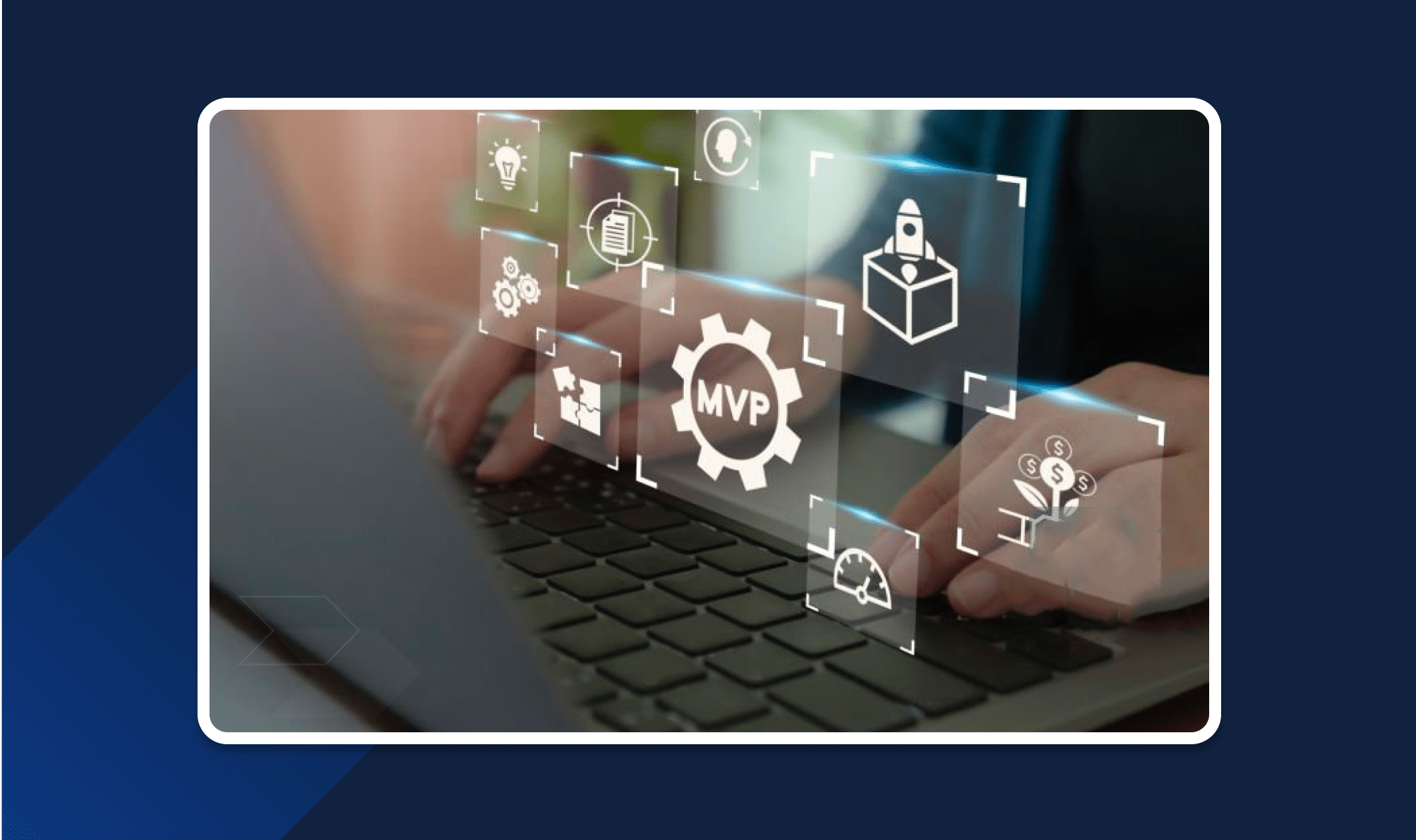
Navigating the MVP Journey – From Concept to Market-Ready Product

Quality Mobile Development In Germany

In today’s competitive market landscape, the success of startups and enterprises is often determined by their ability to efficiently bring ideas to life. The Minimum Viable Product (MVP) approach has emerged as one of the most efficient methods for launching a product with minimal resources and risk. This whitepaper dives deep into the MVP journey, from its inception as a concept to its development as a market-ready product.

We will explore common pain points faced by startups, MSMEs, and large enterprises, review industry case studies, and provide insights into global MVP development strategies. The final section offers actionable steps to overcome obstacles and deliver a successful MVP that drives tangible results.

Introduction: Why MVP Matters

An MVP is the foundation of a successful product. It represents the most basic version of a product that solves customer problems while using the fewest resources. However, navigating the journey from idea to market-ready MVP is often fraught with challenges that can derail businesses. For MSMEs, startups, and enterprises, addressing the key pain points early in the MVP process is crucial for success.

Pain Points in the MVP Journey

  • Lack of Clear Vision and Scope
  • For startups and MSMEs, defining a clear product vision and the scope of an MVP is a significant challenge. Without precise goals, teams risk overdeveloping or misallocating resources.
    Solution: Establishing well-defined success metrics, understanding customer problems, and aligning teams with a single purpose ensures a focused MVP scope.

  • Inefficient Resource Allocation
  • Startups often struggle with limited resources, both in terms of budget and talent. Mismanagement during MVP development leads to higher costs and delays.
    Solution: Prioritize features that solve the most pressing problems and utilize frameworks like Agile to ensure iterative and flexible development.

  • Market Validation & Feedback Loops 
  • Enterprises and MSMEs often launch MVPs without thorough validation, leading to an MVP that fails to resonate with users.
    Solution: Incorporating customer feedback throughout the development lifecycle ensures the MVP remains relevant and improves through iterations.

  • Scaling Beyond MVP
  • Moving from an MVP to a scalable product is where many startups falter, leading to wasted resources and failed launches.
    Solution: Develop with scalability in mind from the start, utilizing cloud infrastructure and modular architecture that grows with the product.

Approaches to MVP Development Globally

  • Lean Startup Methodology
  • Pioneered by Eric Ries, the Lean Startup methodology focuses on rapid experimentation and learning from failures. Businesses develop an MVP based on assumptions and quickly validate these through feedback loops.
    Example: Dropbox began as a simple demo video that explained the product, gathering interest before the actual build.

  • Agile Development
  • Agile focuses on short development cycles, allowing teams to iterate frequently and deliver value incrementally. This helps startups pivot quickly if needed.
    Example: Spotify used Agile principles to develop its MVP, iterating fast while focusing on delivering core functionality to users.

  • Design Thinking 
  • Design Thinking emphasizes user-centric development. The goal is to develop an MVP that delivers high value to customers based on their feedback.
    Example: Airbnb started as a simple website offering air mattresses and breakfast to guests. User feedback helped them iterate and eventually scale to a global platform.

  • Rapid Prototyping 
  • Rapid prototyping allows businesses to create low-fidelity MVPs for testing before developing a full-fledged product. This minimizes time and cost while gauging customer interest.
    Example: Tesla’s early electric vehicle concepts focused on rapid prototyping to test ideas before investing in full-scale production.

Key Steps to Develop a Successful MVP

  • Research & Market Analysis
  • Conduct thorough research to understand your target audience and competitive landscape. This ensures your MVP solves real problems that potential customers face.

  • Build, Measure, Learn 
  • Following the Lean Startup methodology, develop a basic version of your product, measure how users interact with it, and learn from their feedback to make improvements.

  • Prioritize Features
  • Avoid feature bloat by focusing on the core functionalities that address the most significant pain points for users.

  • User Feedback Loops
  • Engage users from the start and use their feedback to refine and iterate on the MVP.

  • Tech Infrastructure & Scalability
  • Ensure your tech stack is built to scale. Cloud solutions like AWS and Azure offer flexible options for startups to scale their MVP as the user base grows.

Conclusion: Overcoming Challenges with the Right MVP Strategy

Whether you are a startup, MSME, or an enterprise, the journey from concept to market-ready MVP can be daunting. However, by adopting globally recognized methodologies like Lean Startup, Agile, and Design Thinking, and understanding how to address key pain points, you can navigate this journey successfully.

Are you ready to take your MVP from concept to market?

Visit https://amazatic.com/mvp/ to explore how we can help you bring your product to life efficiently and effectively. With our expertise in Lean, Agile, and Design Thinking, we ensure your MVP aligns with your business goals and customer needs. Let’s build something great together.

Why Legacy Systems Struggles with IOT Integration and How to Fix It

Quality Mobile Development In Germany

In today’s interconnected world, the Internet of Things (IoT) is rapidly transforming industries by enabling devices to communicate, automate processes, and generate real-time insights. Yet, for companies reliant on legacy systems, integrating IoT is often a formidable challenge. Legacy infrastructure, while reliable and foundational, wasn’t designed with modern IoT in mind, creating hurdles that can derail even the most ambitious IoT initiatives.

But here’s the good news: these challenges are not insurmountable. With the right strategies, businesses can bridge the gap between outdated systems and IoT, ensuring seamless integration while maintaining the reliability of their legacy infrastructure. In this blog, we’ll dive into why legacy systems struggle with IoT integration and explore actionable solutions to overcome these obstacles.

The IoT Promise Meets Legacy Reality

IoT’s potential is undeniable. From enabling smart manufacturing in factories to predictive maintenance in transportation, IoT delivers valuable data and automation capabilities. However, the allure of IoT often collides with the harsh reality of legacy systems—those aging infrastructures still running critical business operations. These systems, built decades ago, were designed with specific, often siloed functionalities and architectures. Consequently, they lack the flexibility and interoperability needed for IoT’s dynamic, real-time communication.

Here’s where things often go wrong. Legacy systems can’t easily handle the volume, speed, or variety of data IoT generates. Furthermore, integrating modern IoT devices into legacy networks can lead to inefficiencies, security vulnerabilities, and scalability problems.

So, what are the key challenges holding legacy systems back from IoT integration?

  • Communication Protocol Gaps
  • One of the biggest hurdles to IoT integration is that legacy systems often use proprietary communication protocols that aren’t compatible with IoT devices. IoT technology relies on protocols like MQTT, CoAP, and HTTP to send and receive data in real-time, while legacy systems may depend on older, closed-loop protocols like Modbus or RS-232. This mismatch creates a gap where IoT devices and legacy systems can’t communicate directly, leading to data silos and lost opportunities.

  • Data Overload and Processing Bottlenecks
  • Legacy systems were not designed to handle the sheer volume of data IoT generates. IoT devices produce massive amounts of data from sensors, meters, cameras, and other devices. This data needs to be processed in real-time to deliver insights or trigger automation. Legacy infrastructure, often built for smaller, slower streams of data, struggles with this sudden influx, creating bottlenecks that affect overall system performance.
    Moreover, without real-time data processing capabilities, the whole point of IoT—being able to act on insights immediately—is compromised. This leads to inefficiencies, lag in decision-making, and missed opportunities for optimization.

  • Lack of Flexibility and Scalability
  • Legacy systems are typically rigid, monolithic structures, with very little flexibility to scale or adapt to new technologies. In contrast, IoT systems are designed to be scalable, accommodating new devices, sensors, or data sources as needed. This rigidity makes it difficult to add IoT devices or expand IoT functionalities without significant overhauls. Additionally, legacy systems often rely on centralized architecture, whereas IoT thrives in decentralized environments, creating friction between the old and new systems. This lack of scalability makes it difficult to leverage IoT across larger operations, reducing the overall impact of an IoT strategy.

  • Security Vulnerabilities
  • IoT security is already a major concern, but the challenge is amplified when legacy systems enter the equation. Older systems often lack modern security features like encryption, multi-factor authentication, or secure data transmission protocols. As IoT devices connect to these legacy systems, they can create potential entry points for cyberattacks. The more IoT devices you introduce, the larger the attack surface becomes. When combined with outdated security protocols on legacy systems, this can open the floodgates to potential breaches, endangering not only the IoT devices but the entire infrastructure.

  • High Costs of Integration
  • Finally, the cost of integrating IoT with legacy systems can be prohibitive. Retrofitting outdated systems to communicate with IoT devices often requires specialized hardware, software, and a team of experts. The expenses can quickly add up, making the entire project seem financially unviable, especially for small to mid-sized businesses.

How to Overcome These Challenges: Actionable Solutions

While these obstacles may seem daunting, they are far from insurmountable. Let’s explore some strategies to fix the issues and ensure a seamless IoT deployment that works with—not against—your legacy systems.

  • Invest in IoT Gateways
  • One of the most effective ways to bridge the communication gap between legacy systems and IoT devices is by using IoT gateways. These gateways act as intermediaries, translating data between IoT devices and older systems, allowing them to communicate without needing to overhaul the entire infrastructure. Gateways can also filter and preprocess data before sending it to legacy systems, reducing the strain on the network and improving overall performance. By investing in IoT gateways, businesses can ensure seamless integration without disrupting existing operations.

  • Implement Edge Computing
  • Edge computing brings data processing closer to the source of data generation—often at the “edge” of the network. For legacy systems struggling with data overload, edge computing can be a game-changer. By processing data locally on IoT devices or nearby edge servers, businesses can reduce the amount of data that needs to be sent to legacy systems for processing. This not only alleviates bottlenecks but also enables real-time decision-making, allowing businesses to act on IoT data instantly. For organizations where speed and efficiency are critical, implementing edge computing is a powerful way to overcome legacy system limitations.

  • Use APIs to Foster Interoperability
  • APIs (Application Programming Interfaces) can act as a bridge between legacy systems and IoT devices. By developing or adopting APIs that allow legacy systems to communicate with IoT platforms, businesses can facilitate seamless data exchange without overhauling their entire infrastructure. APIs create a layer of interoperability, enabling legacy systems to interact with modern IoT platforms, often with minimal disruption. This approach is both cost-effective and flexible, allowing businesses to modernize incrementally rather than through a full-scale overhaul.

  • Prioritize Security at Every Layer
  • When integrating IoT with legacy systems, security must be a top priority. Start by auditing the legacy system’s existing security protocols, identifying vulnerabilities, and addressing them before introducing IoT devices. Consider implementing encryption for data in transit, multi-factor authentication, and secure access controls. Segmenting networks can also prevent potential breaches from spreading across the entire system. A proactive approach to security ensures that legacy systems and IoT devices can coexist without exposing your infrastructure to unnecessary risks.

  • Plan for Scalability from the Start
  • Finally, scalability must be built into your IoT strategy from the outset. Instead of retrofitting an entire legacy system, plan for incremental upgrades. Begin with small-scale IoT projects that can deliver immediate ROI, then expand the IoT ecosystem gradually. This approach not only reduces costs but also ensures that your systems are prepared to scale as your IoT initiatives grow.

Conclusion: Moving Legacy Systems into the Future with IoT

Legacy systems don’t have to be a roadblock to IoT success. With the right strategies—whether it’s investing in IoT gateways, implementing edge computing, using APIs, or enhancing security—businesses can successfully integrate IoT without disrupting their legacy infrastructure. The key is to approach IoT integration thoughtfully, planning for scalability, and ensuring that every step is secure and efficient.

By bridging the gap between legacy systems and IoT, businesses can unlock the full potential of their operations, driving innovation and gaining a competitive edge in today’s digital landscape.

Ready to overcome the challenges of legacy system IoT integration?

Contact Amazatic today for tailored IoT solutions that ensure seamless integration and future-proof your infrastructure.

The Future of MVP Development: Trends and Predictions – A Deep Dive Into The Evolving Landscape

Quality Mobile Development In Germany

In the fast-paced world of technology and product innovation, the Minimum Viable Product (MVP) has solidified its position as a cornerstone of success. But as the tech landscape continues to shift and transform, what does the future hold for MVP development? What emerging trends, groundbreaking predictions, and strategic shifts should entrepreneurs, developers, and startups be paying close attention to? Let’s embark on an in-depth exploration of the exciting future of MVP development.

The MVP: A Strategic Launchpad, Not Just a Prototype

Before we peer into the future, let’s revisit the essence of the MVP. It’s far more than a hastily assembled prototype or a bare-bones product. The MVP is a strategic launchpad, a carefully crafted version of your product with just enough features to attract early adopters and gather critical feedback. It’s the bridge between your brilliant idea and a validated, market-ready product.

The role of an MVP in this context is not just about delivering a basic version of a product but about validating the core technology itself. An MVP allows deep tech startups to demonstrate the feasibility of their innovation, secure early customer feedback, and prove the potential market fit—all while minimizing financial and operational risks.

The Forces Reshaping MVP Development

  • The Democratization of Development: The Rise of No-Code/Low-Code:
  • In the past, building an MVP often required a team of skilled developers. But the advent of no-code and low-code platforms has revolutionized the game. These intuitive tools empower individuals with diverse backgrounds – marketers, designers, even non-technical founders – to create functional prototypes and test ideas without writing a single line of code. This democratization of development is a game-changer, accelerating the MVP process and fostering innovation across industries.

  • AI and Machine Learning: Infusing MVPs with Intelligence:
  • Artificial intelligence (AI) and machine learning (ML) are no longer confined to science fiction. They’re now seamlessly integrated into modern MVPs, enhancing their capabilities and value proposition. AI and ML can automate repetitive tasks, personalize user experiences based on individual preferences and behaviors, and even predict market trends. Imagine an MVP that learns and adapts alongside your users, continuously refining its functionality to deliver maximum impact.

  • Data-Driven Decisions: The Compass for MVP Evolution:
  • In the age of data abundance, every interaction with your MVP is a treasure trove of insights. Modern MVPs are equipped with advanced analytics tools that track user behavior, engagement patterns, and pain points. This data-driven approach enables agile decision-making, allowing you to pivot, iterate, and refine your product in response to real-world user feedback. It’s like having a compass that guides your MVP’s evolution towards success.

  • User Experience (UX): The Heart and Soul of a Successful MVP:
  • A functional MVP is no longer enough to capture attention and drive adoption. The user experience (UX) has become paramount. A seamless, intuitive, and enjoyable UX is essential for attracting and retaining early users. The future of MVPs will prioritize UX design from the outset, ensuring that every touchpoint delights users and leaves a lasting positive impression.

  • Agile MVP Development: Flexibility and Adaptability in Action:
  • The Agile methodology, with its emphasis on flexibility, collaboration, and iterative development, will continue to be a cornerstone of successful MVP strategies. Agile empowers teams to respond swiftly to user feedback and market dynamics, making course corrections without derailing the entire project. This adaptability is crucial in an environment where change is the only constant.

Looking Ahead: Predictions for the Future of MVPs

  • The Rise of Niche MVP Specialists:
  • The era of generic MVP development is giving way to specialization. We’ll see a surge in companies focusing on MVP development for specific industries or technologies. These niche specialists will bring deep domain expertise to the table, ensuring that your MVP is tailored to the unique challenges and opportunities of your target market.

  • MVP as a Service (MVPaaS): A New Paradigm:
  • The cloud is transforming the way we build and deploy software, and MVPs are no exception. Cloud-based platforms offering “MVP as a Service” (MVPaaS) solutions are on the rise. These platforms provide ready-to-use templates, tools, and infrastructure, allowing startups and businesses to launch MVPs quickly and cost-effectively.

  • The Hybrid MVP Experience: Blurring the Lines:
  • The boundaries between the physical and digital worlds are becoming increasingly fluid. This trend is reflected in the emergence of hybrid MVPs that blend both realms. Imagine a smart device prototype paired with a companion app, or a virtual reality (VR) experience that simulates your product in action. These hybrid MVPs offer immersive and engaging ways to connect with potential users.

Choosing Your MVP Development Partner: A Critical Partnership

The success of your MVP often depends on choosing the right development partner. Look for a MVP development company with a proven track record in MVP development for startups. They should be proficient in agile development methodologies, capable of delivering custom MVP development solutions, and deeply knowledgeable about your target market.

Embracing the Future of MVP Development

The future of MVP development is a landscape of exciting possibilities. By embracing emerging trends, leveraging innovative technologies, and prioritizing user-centric design, you can create MVPs that not only validate your ideas but also lay the groundwork for long-term success. Remember, the MVP is not just a stepping stone; it’s a dynamic process of continuous learning, adaptation, and growth.

De-Risking Innovation: The Role of MVP In Navigating Uncertainties For Deep Tech Startups

Quality Mobile Development In Germany

In the fast-evolving landscape of deep tech, where complex technologies and groundbreaking innovations are the norm, startups face an unprecedented level of uncertainty. The journey from concept to market-ready product is fraught with challenges, including technological validation, market feasibility, and securing early-stage investments. This is where the Minimum Viable Product (MVP) emerges as a critical tool, offering a structured approach to de-risking innovation.

The Complexity of Deep Tech : Why MVPs Matter

Deep tech startups are distinguished by their focus on disruptive technologies such as AI, quantum computing, robotics, and advanced materials. Unlike traditional startups, where the emphasis may be on rapid iteration and market testing, deep tech ventures often grapple with high research and development costs, longer development cycles, and the need for substantial initial capital.

The role of an MVP in this context is not just about delivering a basic version of a product but about validating the core technology itself. An MVP allows deep tech startups to demonstrate the feasibility of their innovation, secure early customer feedback, and prove the potential market fit—all while minimizing financial and operational risks.

Validating Complex Technologies

One of the most significant challenges deep tech startups face is proving that their technology works as intended. In fields like biotechnology or AI-driven solutions, the stakes are high, and the margin for error is slim. An MVP serves as a proof of concept, providing tangible evidence that the technology is viable.

For example, consider the case of Rigetti Computing, a startup in the quantum computing space. Rigetti used an MVP to showcase their quantum cloud services, allowing potential customers and investors to experience the power of quantum computing without the need for significant hardware investment. This approach not only validated their technology but also helped secure additional funding to further develop their platform.

By focusing on delivering a functional core that highlights the unique aspects of the technology, deep tech startups can attract early adopters and investors who are keen to back innovative solutions with proven potential.

Mitigating Risks in a High-Stakes Environment

Deep tech ventures often operate in a high-stakes environment where the cost of failure can be enormous. The MVP approach helps mitigate these risks by enabling startups to test critical hypotheses early on. Whether it’s the scalability of a new AI algorithm or the efficacy of a novel drug delivery system, an MVP provides valuable insights into the technology’s strengths and weaknesses.

For instance, NeuroPace, a company developing implantable devices to treat neurological disorders, used an MVP to validate their responsive neurostimulator system. By focusing on a specific use case and gathering clinical data, NeuroPace was able to refine their product and demonstrate its effectiveness, leading to regulatory approval and successful market entry.

By iterating on an MVP, deep tech startups can pivot or refine their approach based on real-world data, reducing the likelihood of costly failures down the line.

Securing Early-Stage Investments

Investors in deep tech are often hesitant to commit significant resources without clear evidence of feasibility and market potential. An MVP can bridge this gap by providing a concrete demonstration of the startup’s vision. It shows that the team can execute their ideas and that there is a demand for the product.

For example, Improbable, a company specializing in virtual world simulations, used an MVP to attract early investment. Their platform, SpatialOS, allowed developers to create large-scale simulations, demonstrating the scalability and flexibility of their technology. This MVP not only validated their approach but also played a crucial role in securing funding from high-profile investors like Andreessen Horowitz.

An MVP that clearly illustrates market potential can be a powerful tool in attracting the attention of investors who are looking for innovative technologies with a strong commercial future.

The Strategic Importance of MVPs in Deep Tech

For deep tech startups, the path to market is rarely straightforward. The complexities of developing and commercializing cutting-edge technologies require a strategic approach to risk management. MVPs are not just about launching quickly but about making informed decisions that can make or break the startup’s success.

At Amazatic, we understand the unique challenges faced by deep tech startups. Our MVP development services are designed to help startups navigate these uncertainties with confidence. By focusing on validating core technologies, mitigating risks, and demonstrating market potential, we empower deep tech innovators to move forward with clarity and purpose.

Conclusion

In the world of deep tech, where uncertainty is the only constant, the MVP approach offers a way to de-risk innovation and pave the way for success. By validating complex technologies, mitigating risks, and securing early-stage investments, MVPs play a pivotal role in helping startups transform groundbreaking ideas into viable products.

As a leader in MVP development, Amazatic is committed to helping deep tech startups navigate these challenges and achieve their vision. Ready to de-risk your innovation? Learn more about our MVP development services or contact us for a consultation at www.amazatic.com

Exploring Quality Mobile Development in Germany Today

Quality Mobile Development In Germany

Quality mobile development in Germany refers to the creation of mobile applications that meet high standards of performance, usability, and design, tailored specifically to the needs and preferences of the German retail market.

This involves not only technical proficiency but also an understanding of local consumer behavior and regulatory requirements.

Effective mobile development can lead to improved customer engagement, streamlined operations, and increased sales in the retail industry.

Key considerations for quality mobile development in Germany include:

  • Robust user experience design that resonates with local consumers.
  • Adherence to data protection laws and regulations.
  • Focus on performance optimization for various devices and operating systems.
  • Regular updates and maintenance to adapt to market changes.

By prioritizing these factors, retail leaders can leverage mobile technology to enhance their offerings and connect more effectively with their customers.

Key Characteristics

Quality mobile development in Germany is characterized by a strong emphasis on precision, innovation, and user-centric design.

Developers in Germany focus on creating applications that not only meet technical standards but also enhance user experience through intuitive interfaces and reliable functionality.

The mobile development ecosystem is backed by a robust infrastructure, access to skilled professionals, and adherence to best practices such as Agile methodologies.

Moreover, German developers prioritize security and data protection, ensuring compliance with regulations like GDPR, which adds an extra layer of trust for users.

Continuous learning and adaptation to emerging technologies and trends are also crucial traits, fostering a culture of excellence in creating high-quality mobile applications.

How Does Quality Mobile Development Work?

Quality mobile development in Germany involves a systematic approach that integrates user-centric design, agile methodologies, and advanced technologies.

Initially, a thorough market analysis identifies user needs, followed by creating wireframes and prototypes to visualize the app functionality.

The development phase employs agile practices, allowing for iterative improvements based on user feedback.

Skilled developers use programming languages such as Swift for iOS and Kotlin for Android, ensuring the applications are stable and efficient.

Quality assurance processes involve rigorous testing, including performance, security, and usability tests, to guarantee an exceptional user experience.

Additionally, continuous integration and deployment practices facilitate regular updates and enhancements post-launch.

Overall, the emphasis on quality and user satisfaction in mobile development in Germany results in high-performing applications that effectively meet market demands.

Quality Mobile Development in Germany Examples

  • German automotive companies focus on seamless mobile apps to enhance user experience, integrating advanced features like location tracking and real-time diagnostics for vehicle maintenance and performance monitoring.
  • Healthcare providers in Germany utilize mobile applications for patient management, enabling secure communication between patients and doctors, appointment scheduling, and accessing medical records, improving overall healthcare delivery efficiency.
  • German e-commerce platforms leverage mobile development to create innovative shopping apps, featuring personalized recommendations, in-app payment solutions, and augmented reality experiences to enhance user engagement and boost sales conversions.
  • Financial institutions in Germany invest in mobile banking applications, prioritizing robust security measures and user-friendly interfaces, allowing customers to manage their accounts, transfer funds, and access financial services effortlessly.
  • Entertainment and media companies in Germany develop streaming apps with high-quality content delivery, offline access, and multi-device synchronization, ensuring users enjoy a seamless entertainment experience across various gadgets.

Importance of Quality Mobile Development

Understanding Quality Mobile Development in Germany is crucial for businesses aiming to thrive in today’s digital landscape.

With the increasing reliance on mobile applications, ensuring high standards of development can significantly impact user satisfaction and retention.

In Germany, renowned for its engineering excellence and innovative tech ecosystem, quality mobile development encompasses not just functionality but also user experience and security. Companies that emphasize these aspects are more likely to succeed, as they cater to the expectations of both the local market and international audiences, ultimately driving growth and fostering brand loyalty.

Expert SAP SuccessFactors Specialists Drive Business Transformation

Sap Successfactors Specialists

SAP SuccessFactors Specialists are professionals who specialize in the implementation and management of SAP SuccessFactors, a cloud-based human capital management (HCM) software.

They integrate various HR functions such as payroll, recruiting, performance management, and employee development into a seamless digital experience, enhancing overall workforce efficiency.

These specialists play a critical role in ensuring that manufacturing organizations leverage the full potential of SAP SuccessFactors to streamline HR processes, improve employee engagement, and drive business growth.

Key responsibilities of SAP SuccessFactors Specialists include:

  • Assessing organizational needs to tailor the SuccessFactors solution accordingly
  • Configuring and customizing modules to best fit the specific HR workflows
  • Providing training and support to HR teams and employees
  • Monitoring system usage and performance, ensuring a smooth operation
  • Staying updated on system upgrades and industry best practices

In the dynamic landscape of manufacturing in Germany, having dedicated SAP SuccessFactors specialists can significantly enhance an organization’s ability to adapt to challenges, optimize talent management, and remain competitive in the industry.

Key Characteristics

SAP SuccessFactors specialists are professionals who possess a unique combination of technical expertise and business acumen, enabling organizations to maximize their human resource management capabilities.

These specialists are well-versed in the functionality of various modules, including core HR, talent management, and analytics, ensuring they can tailor solutions to meet specific organizational needs.

They also demonstrate strong problem-solving skills, adaptability to changing technologies, and effective communication abilities, facilitating collaboration across teams.

Furthermore, successful SAP SuccessFactors specialists often have a deep understanding of industry best practices, which allows them to provide insightful recommendations for improving HR processes and enhancing employee engagement, ultimately driving business success.

How Do SAP Specialists Operate?

SAP SuccessFactors specialists play a crucial role in aligning human resources with business strategy through various methodologies.

They start by assessing an organization’s needs and goals, following which they design tailored solutions using the platform’s suite of modules such as recruitment, performance management, and learning management systems.

Utilizing data analytics, they facilitate informed decision-making, ensuring that human capital strategies are based on actual workforce data.

Specialists configure and optimize the modules to customize workflows that suit organizational processes, ensuring user-friendly interfaces for HR managers and employees alike.

They also provide training on best practices and system functionalities, ensuring that all stakeholders can leverage the platform effectively.

Furthermore, they closely monitor performance metrics, making adjustments as necessary, and thus contribute to ongoing process optimization.

By integrating technology with human resource functions, SAP SuccessFactors specialists enhance operational efficiency and strategic alignment, ultimately driving workforce performance towards realizing the organization’s objectives.

Real-Life Scenarios of Specialists

  • SAP SuccessFactors specialists implement employee performance management systems, enabling organizations to set clear performance expectations, track progress, and provide feedback, thereby enhancing employee productivity and engagement throughout the year.
  • They design and configure onboarding modules, streamlining the integration of new hires into the company’s culture while ensuring necessary training and documentation is completed in a timely and efficient manner.
  • By leveraging analytics tools, SAP SuccessFactors specialists enable employers to gain insights into workforce trends, making data-driven decisions that improve retention rates and optimize workforce planning strategies for better business outcomes.
  • They assist in the creation of personalized employee development plans, identifying training needs and career paths that align with both individual aspirations and organizational goals, fostering a culture of continuous learning.
  • Through effective use of succession planning tools, specialists ensure that organizations identify and prepare future leaders, reducing the risks associated with talent shortages and maintaining business continuity in times of change.

Importance of SAP SuccessFactors Specialists

In today’s rapidly evolving business landscape, understanding the role of SAP SuccessFactors specialists is crucial for organizations that seek to streamline their human resources processes.

These specialists possess the expertise to implement and optimize human capital management solutions, which can significantly enhance workforce efficiency and engagement.

By leveraging their knowledge, companies can improve talent acquisition, employee performance, and overall business outcomes. Furthermore, with the increasing need for data-driven decision-making, SAP SuccessFactors specialists play an essential role in harnessing analytics to drive strategic HR initiatives, ensuring that organizations remain competitive and agile.

Understanding ML Ops in Web Applications Development Efficiently

Ml Ops In Web Applications Development

MLOps, or Machine Learning Operations, refers to the practices and tools used to streamline the deployment, monitoring, and management of machine learning models in production environments, particularly within web applications.

It combines data science, DevOps, and software engineering principles to ensure that ML models are delivered quickly and reliably while maintaining high performance and scalability.

In the context of transportation, MLOps can enhance decision-making processes, optimize routes, and improve the overall efficiency of logistics systems.

Here are some key aspects of MLOps in web application development:

  • Integration of machine learning models into existing web applications.
  • Continuous monitoring and maintenance of ML models to ensure accuracy.
  • Version control for data and models to manage changes effectively.
  • Automated pipelines for data collection, model training, and deployment.
  • Collaboration between data scientists and engineering teams to ensure alignment.

Adopting MLOps practices can lead to more innovative transport solutions and improved operational efficiency.

Key Characteristics

The essential traits of ML Ops in web applications development include seamless integration of machine learning models into production environments, continuous monitoring of model performance, and efficient management of model lifecycle.

This approach emphasizes collaboration between data scientists and operational teams to streamline workflows, ensuring that ML models not only perform optimally but are also scalable and maintainable.

Additionally, ML Ops promotes the automation of deployment processes, version control for models, and the use of robust infrastructure to facilitate data pipelines, resulting in more reliable and responsive web applications that leverage the power of machine learning.

How Does MLOps Work in Application Development?

MLOps in web application development combines machine learning and operations practices to streamline model deployment, management, and monitoring.

The process begins with data collection and preprocessing, where raw data is cleaned and transformed for effective model training.

Next, machine learning models are developed, tested, and validated to ensure accuracy and reliability.

Once ready, MLOps facilitates automated deployment pipelines that move models into production effortlessly.

Monitoring tools are then implemented to observe model performance continuously, capturing metrics and feedback for real-time adjustments.

This leads to continuous integration and continuous delivery (CI/CD) practices, allowing frequent updates without downtime.

Furthermore, version control is essential for managing iterative changes to models, ensuring that previous versions can be restored in case of unforeseen errors.

Automation tools help manage and trigger re-training processes as new data arrives, ensuring the model remains relevant and effective.

Altogether, MLOps enhances the scalability and reliability of web applications, enabling them to leverage machine learning efficiently while responding dynamically to changing user needs.

Examples of MLOps in Applications

  • MLOps integrates model management and deployment within web applications, allowing seamless updates and continuous learning to enhance user experiences efficiently.
  • Data validation and monitoring tools ensure the quality of input data for machine learning models, thereby minimizing errors in predictions and maintaining application reliability.
  • Automated deployment pipelines streamline the process of taking machine learning models from development to production, enabling rapid iterations and faster time-to-market for web applications.
  • Continuous training of models in production allows web applications to adapt to new data patterns, improving accuracy and relevance by retraining automatically based on feedback loops.
  • Real-time analytics dashboards empower developers by providing insights into model performance, usage metrics, and user interactions, facilitating informed decision-making and iterative enhancements.
  • Version control for machine learning models helps track changes over time, ensuring reproducibility and ease of rollback in case of performance degradation or bugs.
  • Collaboration tools support cross-functional teams working on ML projects, bridging gaps between data scientists and developers to align objectives and share knowledge effectively.

Importance of ML Ops in Web Applications

Understanding ML Ops in web applications development is crucial for creating efficient, scalable, and reliable machine learning models.

As web applications increasingly leverage artificial intelligence, the integration of ML Ops practices ensures that models are not only effectively developed but also seamlessly deployed and maintained.

This approach enhances collaboration between data scientists and operations teams, enabling continuous integration and delivery of ML applications. By adopting ML Ops, organizations can improve model performance, reduce downtime, and easily adapt to changing data, ultimately providing a better user experience and driving business success.

Objectives of Software Testing

Sports Streaming Platform Through Technology

Testing is part of delivering good quality software in this software-driven world. But what exactly is software testing? It simply implies checking the suitableness of the software to ensure that it works exactly as expected, runs efficiently, and fulfills the needs of the end-user. Testing helps development teams detect problems and resolve them before the software is released to end-users.

Poor testing can be a disaster. Try releasing software that is full of bugs, and it could all lead to frustrated users, security risks, and a huge financial loss. Worse, it may even harm your brand reputation. That’s why proper software testing is absolutely not something to give up if you don’t want to have a headache later on.

Significance of Software Testing

Software testing is more than just hunt for bugs, it’s about making sure the product matches the required outcome from a user’s perspective and passes various kinds of tests. Let’s see why testing is the need of the hour :

Cutting Costs :

It is quite cheaper to find bugs early on than fixing them once the product has launched.

User Satisfaction :

Happy users are loyal users. Testing ensures a smooth, glitch-free experience.

Security :

Weak software can invite hackers, so testing ensures that the product is secure.

Performance :

No one enjoys buggy or failing software, so testing makes sure that everything works out right.

Objectives of Software Testing

Now that we have covered why testing is important, it is time to introduce the main objectives that it seeks to achieve.

Finding Defects and Errors :

Among the most fundamental objectives for which software testing is considered is the finding of defects or programming errors that make a system not function well. No one would like a launch bug to make the software crash or behave erratically.

Early bugs identified mean that the development team fixes them before the product is released. It saves time and money while maintaining the reputation of the company. What’s here is that the software needs to work precisely as expected.

Software Quality Improvement :

Besides, quality assurance is another key goal of software testing. Quality means no bugs at all. Quality comprises reliability, usability, and stability. Testing ensures that the software delivers high degrees of functionalities, usability, and performance standards.

The developers can then make adjustments in the testing phase with regard to areas that need improvement, which would overall improve the quality of the software for better experience and usability to the user.

Security Enhancement :

Security is a huge issue in the digital world, thanks to the daily news about data breaches and cyber attacks. Indeed, software vulnerabilities can be readily exploited by malicious actors in easy ways. This is one of the main reasons for testing-test and optimize security, find the flaw before a hacker.

Testing will identify the weak points where security may be breached. Secure these points, and user data will still be safe, and your company will avoid the big costs of breach or being on the bad side of the law.

A Quality Product  :

It, therefore, means you’re paying for the fact that the product reaching the user is of high quality. Testing ensures proper software performance on different devices and varied environments and delivers all the features that users expect.

A well-tested product means fewer bugs post-launch, fewer complaints, and better user satisfaction. Ultimately, a quality product thus means trust to the user-which ultimately translates into building brand value.

Verify User Requirements :

Good software which doesn’t meet user requirements is headed straight for disaster. That’s why validating whether the software does what users need is one of the objectives of testing. This would then encompass functional testing-does it do it well? And non-functional testing-is it stress-worthy or performs well enough in less-than-ideal conditions?

This, therefore, means that the validation of the requirements of the user through testing will ensure that indeed problems for which the product was developed are solved and thus it enhances fit between the product and its users.

Conclusion

Software testing is a very important step toward ensuring the quality, security, and success of any software product. Probably, identifying bugs, improvement of software quality, increased security, high-quality delivered product or just to confirm that it satisfies all the user requirements could be summarized by saying testing helps the teams develop software that works and works well.

Testing is not about fixing defects, but truth to tell, delivering a reliable, user-friendly software that makes perfect sense to the needs of customers. This is why thorough software testing is one of the smartest moves you can ever make if you want your software to stand the test of time.

What is MVP in Software Development?

Sports Streaming Platform Through Technology

In the fast-paced world of software development, bringing a product to market quickly and efficiently is essential. This is where the concept of Minimum Viable Product, or MVP, for short comes in. An MVP allows companies to release a minimum version of software with its essential features so that it can then be validated before more investment into it takes place. It allows a business to receive reams of early-user feedback, reduce risks associated with product development, and develop according to real-world insight.

Having an understanding of what an MVP is and how it should be executed can make all the difference in the world between success and failure, especially for any business-most particularly start-up companies. So, what does MVP mean in software development and how can it best be built?

What does MVP mean in Software Development?

The idea of an MVP is more to learn how best to solve the needs of users while gathering valuable feedback for future development. Unlike a fully-fledged product, an MVP concentrates on solving one problem or providing a solution with minimal functionality. This will help businesses validate the market fit without expending too much money and time on development.

MVP is an iterative process in which the input of users is used over time to improve something. It’s not about the perfect launch but a launch of product that can fulfill all the basic necessities of any user and then keeps on growing.

How to Build an MVP – The Amazatic Approach

At Amazatic, we have a structured and strategic approach toward building MVPs. Using this method, we make sure that businesses achieve their objectives with the most minimalistic means in terms of risk and cost. Here’s how we do it :

Ideation & Market Research :

The ideation and market research phase involves defining the problem your product aims to solve by clearly identifying the pain points or needs. We help businesses understand their target users by analyzing demographics, behaviors, and preferences, ensuring the MVP caters to the right audience. Competitor analysis is also crucial—we assess existing solutions in the market, identifying their strengths and weaknesses.

Additionally, we validate your idea through thorough market research, using surveys, interviews, and data analysis to ensure your MVP aligns with real market needs.

Feature Prioritization :

It is not necessary to include all features in the first version of the product. Our teams assist businesses in prioritizing them based on the needs of the user primarily where more value would be delivered. In this way, the MVP addresses the core problem and keeps the time and cost of development in line.

Design & Development :

Having defined the key features, our core team now begins to design and develop this software. This involves wireframe and UI designs as well as front-end and back-end features. It focuses on building the most usable product at the most elementary level.

Testing & Feedback :

Testing is among the most important stages in the creation of an MVP. At Amazatic, we test thoroughly to ensure that the product meets every requirement and has no critical bugs. After the deployment, early adopter feedback comprises the input that can be used for improvement.

Launch & Learn :

Now, with the MVP tested and refined, it’s ready for launch. That’s not where it stops, though. At Amazatic, we help businesses collect data from real users, learn from them, and improve future iterations of a product. This feeds into the overall improvement of the product made possible by the actual behavior and needs of the users.

Skills Needed to Build an MVP

The construction of an MVP requires technical as well as managerial skills. At Amazatic, we bring together a team of experts with the skills necessary to deliver a high-quality MVP. Here are the essential skills needed :

UI Design/Front-End Development :

A clean intuitive interface is an important need in any product. Front-end developers and UI designers ensure that the product will look attractive and intuitive, for easy use, hence the overall experience of the users..

Back-end Development :

The back-end is the engine of your product that handles all the server-side logic, databases, and APIs. Properly skilled back-end developers are very important for you to ensure that your MVP functions properly, scales efficiently, and can handle user interactions seamlessly.

Project Management :

Project management is also crucial in keeping the project on course. The MVP is to be developed within the established timeline and budget by a capable project manager, who has coordination with multiple teams so that they work without flaws in communication and progress.

Benefits of Partnering with Amazatic for MVP Services

At Amazatic, we offer a range of benefits to businesses looking to build their MVP. Here’s why partnering with us will ensure the success of your MVP:

Expert Guidance :

We have years of experience with expert guidance through every stage of MVP development. Your product will be built with the right strategy and technical precision through Amazatic.

Cost & Time Efficiency :

We help develop a core MVP that does not have unnecessary extra costs but meets the core business needs. Our process is quick, getting your product out to market much sooner.

Customized Solutions :

Every business has different needs. At Amazatic, we tailor the MVP to fit your needs so that the product addresses specific key pain points of your target audience.

High-Quality Deliverables :

The quality we are working upon is never compromised, even in basic versions of your product to robust and user-friendly and up to the mark as per industry.

Scalability & Usability :

MVPs developed in-house possess scalability where growth in your business can evolve seamlessly. Our MVPs are also tailored for peak usability, offering all a user could have experienced.

Conclusion

The MVP in the competitive field of software development could help in testing ideas, validating assumptions, and helping drive a product to the market much faster. It focuses key features on getting first customer feedback, so business will be sure to build a product that really meets their customers’ needs.

An MVP requires the right blend of skills, strategic planning, and an ability to learn and iterate quickly. Amazatic is all about assisting businesses to bring their MVPs to life, thus providing them with the best possible start-up in the development of their product.

Ready to build your MVP? Contact Amazatic today to discuss how we can help turn your vision into reality.

How to Build a Minimum Viable Product?

Sports Streaming Platform Through Technology

In this fast-paced world of software development, speed to market is essential to having a competitive edge. One of the best ways of doing so is through building a Minimum Viable Product (MVP). This would allow you to launch a simplified version of your product and possibly help address core functionalities. With this, you’ll be able to test the market with only a simplified version of your product and gather feedback before pushing for full development.

In this way, companies will be able to diminish risks and optimize their product according to insights taken from the real world. The importance of building an MVP, the steps involved, and challenges that usually come up while making the process are discussed in this blog.

What is a Minimum Viable Product (MVP) & Why it is Important?

A Minimum Viable Product is the most basic version of a product that encompasses only those features that satisfy early users and give value. The basic objective of an MVP is to test the product idea in real-market conditions, have feedback from the users, and then make informed decisions for further development. An MVP allows businesses to validate their assumptions and minimize the risk of launching a product that does not meet the needs of its market.

It allows you to launch much faster, cut your development costs, and get valuable insights into what users want. Instead of trying to build a fully featured product from the very beginning, an MVP focuses on core functionalities that will alleviate the most significant problems for your target audience.

Benefits of Building an MVP

Developing an MVP offers several benefits to businesses looking to innovate:

Faster Time to Market :

An MVP can be developed and rolled out in a short period of time, and thus the business can react faster to market demands.

Reduced Development Costs :

In developing only the must-have functionalities, development costs are reduced based on proper resource allocation.

User-Centered Product Development :

An MVP will allow you to get user feedback much earlier in the development process so that the final product is aligned with the actual needs of the users.

Lower Risk :

Validating your idea through an MVP avoids a higher risk of failing since if the idea doesn’t resonate with the users, pivots or iterations can be made without losing much money.

Building Investor Confidence :

A successful MVP demonstrates to potential investors that your product has market demand, increasing your chances of securing funding.

How to Build a Minimum Viable Product?

Building an MVP is a structured approach to ensure that it serves its purpose and answers the demands on the market. At Amazatic, we adhere to a robust process that takes care of every detail in MVP development. The following steps form part of our process.

Ideation & Market Research :

The MVP journey starts with clearly defining the problem your product aims to solve. t involves finding out the pain points in the experience of your target audience and then figuring out how your product can help address it. Market research plays a crucial role in validating your idea. It helps you gather insights from potential users, understand their preferences, and analyze competitors’ offerings.

Define the Problem: Identify the main issue that your MVP will solve. This helps ensure the product has a purpose and solves an actual problem in real life.

Identify Target Users: Understand the needs, behaviors, and preferences of your ideal customers. This informs the design and functionality of your MVP.

Analyze Competitors: Analyze the solutions currently available in the marketplace, their strengths, and weaknesses. Thus, differentiate your product and provide a unique value proposition.

Conduct Market Research: Try to validate your assumptions through surveys, interviews, and data analysis to ensure that your product meets current market demand.

Feature Prioritization :

After formulating the problem and conducting a market research, decide which features to put in the MVP. Functionality needs to be balanced with simplicity. The core problems need to be addressed by focusing on only the most basic functions that have a direct impact on the primary problem of this application. The less important things can then wait for the latter stages of development.

Design & Development :

After the features have been prioritized, the designing and development process start working on the stage. The process here must address the ease of use of interface but with a powerful backend to cater to core functionalities. In the case of Amazatic, we strictly adhere to best UI/UX designing principles that ensure, despite minimum features, the MVP presented before you is more intuitive.

UI Design/Front-End Development: The interface needs to be minimalistic, engaging, and effortless for users to engage with the product.

Back-End Development: The back-end setup needs to be sturdy so that the core functionality offered through the product operates with no glitch and scalability.

Testing & Feedback :

Testing is considered an integral part of the development process for MVP. It ensures that your product works well and fulfills the expected behavior by your target users. Once your MVP is ready, gathering feedback from early adopters is really important as it will make you know the areas where improvements have to be done and fine tune your product.

Testing: Perform rigorous testing to identify bugs and ensure that the product functions as intended.

Gather Feedback: Use customer feedback to validate your value proposition for the full-scale launch and fix all the wrong areas.

Launch & Iterate :

After testing and validation of the MVP, the next is its launch in a large-scale environment. However, at this point, development doesn’t stop. Immediately after the launch, it becomes crucial to have continued gaining feedback from the users, monitoring performance metrics, and iterating the product based on what has been learned from data.

Launch: Deploy the MVP to the market and monitor its performance.

Iterate: Keep incorporating feedback from actual users, perfect the product, and develop new features in further releases.

Challenges Faced While Building an MVP

MVP development might seem easy but comes with its list of hindrances. Now that we have discussed the mindset you need to follow to build an MVP, let’s move on to some of the common challenges and how you can overcome them:

Scope Creep :

Most often, over-engineering is feature creep done at the time of development. Stick to core functionalities and avoid any features that cause it. Present a clear roadmap and stick to it and avoid scope creep.

Limited Resources :

With constrained budgets and timelines, there may be pressure to cut corners. However, sacrificing quality for speed can harm the product’s long-term success. Proper planning and resource allocation are essential

Unclear Target Audience :

Failing to clearly define your target audience can result in building a product that doesn’t resonate with users. Conduct thorough market research and involve potential users early in the process to avoid this pitfall.

Insufficient Testing :

Neglecting testing can lead to launching a product with bugs and errors, damaging your brand’s reputation. Rigorous testing and gathering feedback from early users are key to overcoming this challenge.

Conclusion

Building a Minimum Viable Product is an essential step in developing a successful product. It enables businesses to validate their ideas, test the market, and gather feedback before committing to full-scale development.

At Amazatic, we follow a structured approach to MVP development, ensuring that every product is built with scalability, usability, and market demand in mind. By overcoming common challenges such as scope creep and insufficient testing, businesses can launch an MVP that provides value to users and sets the stage for future growth.

If you’re ready to bring your product idea to life, contact Amazatic today and let us help you build an MVP that drives success.